


DJI makes the easiest drones to learn on, which is why most first drones are DJI drones. It also, in late 2026, makes the most confusing line-up it has ever sold. There are seven models a beginner could reasonably buy, from the $199 Neo to the 1-inch-sensor Mini 5 Pro, and in the United States only four of them are officially available, because DJI was added to the FCC Covered List in December 2025 and no model launched since has received authorisation. A guide that ignores that is useless to half its readers.
So this one ranks every DJI drone a beginner should consider, explains exactly what each step up in price buys, and tells you which models you can buy where. It is built from DJI’s published specifications, owner reports and the long-form reviews we link throughout, including our own DJI Flip review and DJI Mini 4K review. If you want the general framework before the DJI specifics, our drone buying guide is the place to start.
Our picks at a glance
| Rank | Model | Best for | Weight | Camera | Obstacle sensing | Flight time | Price | Officially sold in US |
|---|---|---|---|---|---|---|---|---|
| 1 | DJI Mini 4K | Best value first camera drone | 249 g | 1/2.3-inch, 12 MP, 4K/30 | Down only | 31 min | $299 | Yes |
| 2 | DJI Flip | Nervous first-time pilots, solo creators | 249 g | 1/1.3-inch, 48 MP, 4K/60 | Forward + down | 31 min | $439 | Yes |
| 3 | DJI Neo | Cheapest DJI, palm-launch clips | 135 g | 1/2-inch, 12 MP, 4K/30 | Down only | 18 min | $199 | Yes |
| 4 | DJI Mini 4 Pro | The step-up with real obstacle avoidance | 249 g | 1/1.3-inch, 48 MP, 4K/60 | Omnidirectional | 34 min | $759 | Yes (stock varies) |
| 5 | DJI Lito 1 / Lito X1 | The new beginner line outside the US | 249 g | 1/2-inch or 1/1.3-inch, 48 MP | Omnidirectional vision; X1 adds forward LiDAR | 36 min | €339 / €419 | No |
| 6 | DJI Neo 2 | Neo with LiDAR and 4K/60 | 151 g | 1/2-inch, 12 MP, 4K/60 | Forward LiDAR + down | 19 min | about €239 | No |
| 7 | DJI Mini 5 Pro | The sub-250 g ceiling | 249 g | 1-inch, 50 MP, 4K/60 | Omnidirectional + LiDAR | 36 min | €799 | No |
How we chose
Five criteria, in order. Weight under 250 g, because it keeps a beginner out of FAA registration and Remote ID in the US and in the lightest paperwork tier in the UK and EU. A mechanical gimbal and GPS hold, because they are the difference between a camera drone and a toy. Flight assistance a beginner will actually use: return-to-home, a beginner mode, and obstacle sensing where the price allows. Price against what the next model up adds, so that each recommendation is a conscious trade. And availability and support, which in 2026 means asking whether DJI will sell, service and insure the drone where you live. The DJI Avata 2 and the Air and Mavic lines are excluded; all are over 250 g and none is a first drone unless FPV or paid work is the goal from day one.
The best DJI drones for beginners, reviewed
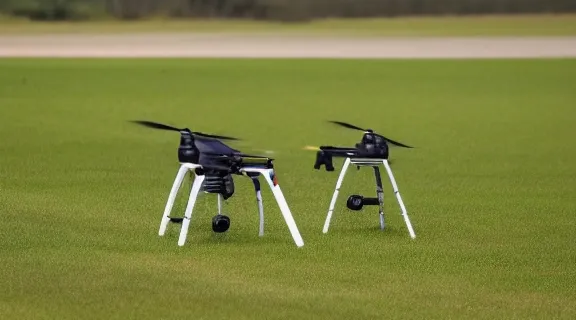
1. DJI Mini 4K: the best value first camera drone
The Mini 4K is the drone we recommend to more beginners than any other, and it is the simplest DJI to explain. For $299 you get a 249 g folding airframe, a 3-axis mechanical gimbal, 4K video at 30 frames per second with a 100 Mbps bitrate, GPS position hold, return-to-home, DJI’s O2 transmission rated to 10 km, and a 31-minute battery that delivers 24 to 28 minutes in the field. Sport mode reaches 16 m/s and the bare airframe handles Level 5 wind better than the guarded Flip does.
What you give up is everything that costs money. The sensor is a small 1/2.3-inch, 12-megapixel chip that fades after sunset. There is no forward obstacle sensing, no subject tracking, no log profile and no internal storage. For a beginner with open space to learn in, none of that matters in the first season, and the $150 Fly More Combo with three batteries is the best accessory buy in this list. It remains FCC-authorised and sold in the US with full warranty and Care Refresh at about $40 a year. Our full Mini 4K review weighs it against every rival.
Buy it if you want the cheapest real DJI and can learn in open space. Skip it if you fly near trees or want the drone to follow you.
2. DJI Flip: the safest first drone, and a vlogger’s favourite
The Flip is what happens when DJI designs a drone around the fear of crashing. Four full-coverage folding propeller guards, a forward 3D infrared sensor, downward sensors, palm takeoff and landing, and a mode button on the body that launches one of six preset shots without a controller or a phone. Wrapped inside is the camera from the Mini 4 Pro: a 1/1.3-inch, 48-megapixel sensor shooting 4K at 60 frames per second in HDR, 4K/100 slow motion, 150 Mbps and 10-bit D-Log M. The O4 link is rated to 13 km and the 3110 mAh battery gives 22 to 28 real minutes.
The costs are noise, since the guards sit in the propwash and make it the loudest small DJI, less composure in gusts than a Mini despite the same Level 5 rating, a 12 m/s top speed, and forward-only sensing that does nothing in Sport mode. At $439 with the RC-N3 it is $140 more than the Mini 4K; the RC 2 kit at $639 and the Fly More Combo at $779 are harder to justify. It is FCC-authorised and sold in the US, which in late 2026 makes it one of the most modern DJI cameras an American can buy officially. Read the DJI Flip review for the detail.
Buy it if you are nervous, fly near obstacles or people, or film yourself. Skip it if you want speed and wind stability for less.
3. DJI Neo: the cheapest way into DJI
At $199 the Neo is a 135 g palm-launched selfie camera that happens to be a capable small drone. Press the button on top, hold it out, and it flies one of six preset shots in 4K at 30 frames per second, stabilised by a 1-axis gimbal and electronic stabilisation, then lands back on your hand. It has GPS, return-to-home, 22 GB of internal storage, an 18-minute battery that gives about 15 in practice, and built-in propeller guards. Add the optional RC-N3 controller and it becomes a piloted drone with DJI’s O4 link; add the FPV goggles and motion controller and it becomes a beginner FPV drone.
Its limits are the 1-axis gimbal, which shows a shimmer in wind and low light that a 3-axis gimbal never does, the small 1/2-inch sensor, the short battery and an 8 m/s top speed in its default modes. It is not a camera drone in the Mini sense, but it is the best $199 you can spend on a first DJI, and far better than any self-flying rival at the price, as our HoverAir X1 review explains. FCC-authorised and sold in the US; Care Refresh is about $19 a year.
Buy it if you want hands-free clips of yourself and the option to learn to fly later. Skip it if you want a real camera drone; spend $100 more on the Mini 4K.
4. DJI Mini 4 Pro: the step up with real obstacle avoidance
The Mini 4 Pro, launched in September 2023, is the oldest drone on this list and still the most complete sub-250 g drone officially sold in the US. It pairs the 1/1.3-inch, 48-megapixel camera with omnidirectional vision sensing that can brake or route around obstacles in every direction, 4K/60 HDR and 4K/100, D-Log M, true vertical shooting, 34 minutes of flight (45 with the Plus battery, which takes it over 250 g), O4 at 20 km and 16 m/s in Sport. ActiveTrack 360° is the best subject tracking in the class.
At $759 with the RC-N2, $959 with the RC 2 and $1,099 for the Fly More Combo Plus, it costs two and a half Mini 4Ks. That is worth it for one kind of beginner: the one who already knows they will fly in woods, around buildings or for money, where omnidirectional sensing pays for itself the first time it stops a crash. Stock has been inconsistent in the US since 2025, and the lookalike SkyRover X1 sold at Best Buy is widely reported to be a rebadged Mini 4 Pro with a different support model. If a genuine Mini 4 Pro is in stock at an authorised dealer, it is the safest premium buy in the US. Our obstacle-avoidance guide explains what the extra sensors actually do.
Buy it if you fly in cluttered environments or plan to earn from footage. Skip it if you are not yet sure the hobby will stick.
5. DJI Lito 1 and Lito X1: the new beginner line, outside the US
DJI launched the Lito series on 23 April 2026 as its first drones built specifically for first-time pilots, and they are the models we would recommend first to a beginner in Europe, the UK, Australia or Asia. Both weigh 249 g, fly for 36 minutes and use the O4 link. The Lito 1, at €339, has a 1/2-inch, 48-megapixel sensor, omnidirectional vision sensing for daylight flying and a microSD slot in place of internal storage. The Lito X1, at €419, steps up to a 1/1.3-inch, 48-megapixel sensor, adds a forward LiDAR so the sensing works in low light, and gains D-Log M and 42 GB of internal storage. The X1 is, in effect, a Mini 4 Pro’s sensing and camera for the price of a Flip.
Neither is sold in the US. DJI’s FCC application was pending at launch and nothing has changed since, so US listings are gray imports with no DJI US warranty and CE radio limits. For everyone else the Lito X1 is the best-value beginner drone DJI has ever made, and it makes the Mini 4 Pro hard to justify.
Buy the Lito X1 if you are outside the US and want the bigger sensor and low-light sensing under €450. Buy the Lito 1 if you fly in daylight and want to save €80.
6. DJI Neo 2: the Neo with LiDAR
The Neo 2, launched on 13 November 2025, fixes the original Neo’s two biggest gaps. A forward LiDAR sensor and downward infrared give it real obstacle sensing in low light, and the camera moves to 4K at 60 frames per second with 4K/100 slow motion on a 2-axis gimbal. Weight rises to 151 g, flight time to 19 minutes, storage to 49 GB, and gesture control and a faster 43 km/h follow speed make it a far better sports camera. At about €239 in Europe and £209 in the UK it is the best self-flying camera you can buy.
It is not officially sold in the US. Americans should buy the original Neo or look at the HoverAir line instead.
Buy it if you are outside the US and want a palm-launch drone that can see. Skip it if you want a real camera drone; the Lito 1 is €100 more.
7. DJI Mini 5 Pro: the sub-250 g ceiling
The Mini 5 Pro, launched 17 September 2025, is the most capable drone that still weighs under 250 g: a 1-inch, 50-megapixel sensor, 4K/60 HDR and 4K/120, omnidirectional vision plus forward LiDAR, 36 minutes of flight (52 with the Plus battery), a rotating gimbal for true vertical video and the O4+ link. At €799 it is a lot of drone and not really a beginner’s drone; it is the drone a beginner buys when they already know aerial photography is going to be their thing and they want to skip two upgrades.
It is not officially sold in the US, where gray-import units run $1,000 and up with no US warranty. Outside the US it is the drone to grow into. Our best drone to buy in 2026 guide covers it alongside the heavier Air and Mavic options.
Buy it if you are outside the US, serious about photography and willing to pay for the 1-inch sensor. Skip it if you are not; the Lito X1 is half the price.
What about the DJI Avata 2 and FPV?
The Avata 2 is DJI’s beginner FPV drone: goggles, a motion controller, a ducted 377 g airframe and a 1/1.3-inch 4K/60 camera, for roughly $1,000 as a kit with goggles and controller. It is a superb way to learn FPV but it is not a first drone for a photographer, it needs registration and Remote ID everywhere, and crashes are part of the sport. If FPV is what you actually want, read our guide to what FPV drone flying is first, and consider the $199 Neo with the goggles bundle as a cheaper entry.
Key features to compare
Sensor size matters more than megapixels. DJI’s beginner line uses three sizes: 1/2.3-inch (Mini 4K), 1/2-inch (Neo, Neo 2, Lito 1) and 1/1.3-inch (Flip, Mini 4 Pro, Lito X1), with the Mini 5 Pro alone at 1-inch. Each step up is a visible improvement at dusk and dawn.
Obstacle sensing comes in three tiers: downward only (Mini 4K, Neo), forward plus downward (Flip’s infrared, Neo 2’s LiDAR) and omnidirectional (Mini 4 Pro, Lito 1, Lito X1, Mini 5 Pro, with the Lito X1 and Mini 5 Pro adding LiDAR for low light). Only the omnidirectional systems can route around obstacles; the forward systems brake. All of them are off in Sport mode and none sees thin branches or wires.
Transmission. The Mini 4K uses O2 at 10 km; everything newer uses O4 at 13 to 20 km, or O4+ on the Mini 5 Pro. You will never fly that far legally, but the rating predicts how clean the feed is at 400 m behind trees.
Controllers. The RC-N series (N1C, N2, N3) clamps your phone and is included in the base kits. The RC 2 has its own screen and adds about $200; it is a luxury for a beginner. The Neo, Flip and Neo 2 can also be flown from a phone over Wi-Fi or launched from the palm with no controller at all.
Batteries. Every drone here is rated 31 to 36 minutes except the Neos at 18 to 19, and every one delivers 70 to 80 percent of that in practice. The Fly More Combos add two batteries, a hub and a bag for $140 to $150 and are worth it for anyone flying more than once a week. The Mini 4 Pro and Mini 5 Pro “Plus” batteries extend flight time but push the drone over 250 g, which changes your registration status. Our battery care guide covers the rest.
DJI Care Refresh costs roughly $19 a year for the Neo, $40 for the Mini 4K, $59 for the Flip and $80 for the Mini 4 Pro on DJI’s US store, and covers two replacements for crashes and water damage. Buy it with the drone; it cannot be added later than 48 hours after activation without a verification video.
Budget vs premium: what the extra money buys
| Step | From → To | Extra cost | What you gain |
|---|---|---|---|
| Neo → Mini 4K | $199 → $299 | $100 | 3-axis gimbal, 31-minute battery, a real controller, 16 m/s, far better footage |
| Mini 4K → Flip | $299 → $439 | $140 | 1/1.3-inch sensor, 4K/60 and D-Log M, forward sensing, full prop guards, palm launch, tracking |
| Flip → Mini 4 Pro | $439 → $759 | $320 | Omnidirectional sensing, 16 m/s, 34 minutes, vertical shooting, ActiveTrack 360°, quieter and steadier |
| Lito 1 → Lito X1 (non-US) | €339 → €419 | €80 | 1/1.3-inch sensor, forward LiDAR for low-light sensing, D-Log M, 42 GB storage |
| Lito X1 → Mini 5 Pro (non-US) | €419 → €799 | €380 | 1-inch sensor, 4K/120, O4+, rotating gimbal, longer flight |
The best value step on the list is Neo to Mini 4K, which turns a selfie camera into a camera drone. The second is Lito 1 to Lito X1 for buyers outside the US, where €80 buys the bigger sensor, LiDAR and a log profile. The hardest to justify is Flip to Mini 4 Pro in the US, unless you know you will fly in clutter.
The cheapest DJI drones
If price is the constraint, these are the honest options. The Neo at $199 is the cheapest new DJI and frequently drops to around $159 to $179 on sale. The Mini 4K at $299 is the cheapest real camera drone, and DJI’s refurbished store periodically lists it lower with a full warranty. A used Mini 3 (1/1.3-inch sensor, 38 minutes, true vertical) can be found for Mini 4K money and is a better camera if the battery cycle count is low, but it has no forward sensing either. Avoid a Mini 2 SE new in 2026; the Mini 4K is the same airframe with 4K and longer range for the same price. And do not buy a gray-import Neo 2 or Lito in the US to save money, because the warranty you give up is worth more than the difference.
Our best drone deals page tracks when these actually drop.
How to pick the right one for you
Answer four questions.
Where are you? In the US, choose from the Mini 4K, Flip, Neo and Mini 4 Pro, all FCC-authorised and sold officially. Everywhere else, add the Lito 1, Lito X1, Neo 2 and Mini 5 Pro, and the Lito X1 becomes the default recommendation.
Where will you fly? Open fields and beaches: Mini 4K or Lito 1. Parks, gardens and woods: Flip, Lito 1, Lito X1 or Mini 4 Pro. Around people and indoors: Flip or Neo.
What do you want from it? Footage of the world: Mini 4K, Lito or Mini 4 Pro. Footage of yourself: Neo, Neo 2 or Flip. Both: Flip.
What is your real budget? Including two spare batteries, a microSD card and Care Refresh, add about $150 to any price above. If that pushes a Flip past what you planned, a Mini 4K Fly More Combo at $449 is the complete kit for the same money. If it pushes a Mini 4 Pro past it, the Flip is the right compromise.
Then, before you order, read our guide to beginner drone buying mistakes. It covers the Plus-battery weight trap, the gray-import problem and the Fly More maths in more detail than any product page will.
Frequently asked questions
Which DJI drone is best for a complete beginner?
The DJI Mini 4K for most people: $299, a real gimbal, GPS hold, O2 transmission and a 31-minute battery, under 250 g. The DJI Flip if you are nervous about crashing or fly near obstacles, because its propeller guards and forward sensing make it the safest first drone. Outside the US, the Lito X1 is the best all-round choice.
Which DJI drones can I still buy in the US in 2026?
The Mini 4K, Flip, Neo and Mini 4 Pro were FCC-authorised before DJI was added to the Covered List in December 2025 and remain legal to sell, buy and fly through DJI’s US store and authorised dealers. The Neo 2, Lito 1, Lito X1 and Mini 5 Pro are not officially sold in the US; listings there are gray imports with no US warranty.
Do I need a licence for a DJI Mini?
In the US a sub-250 g drone needs no registration or Remote ID for recreational flying, but you must pass the free TRUST test and fly under 400 ft in sight. In the UK, since January 2026, any camera drone of 100 g or more needs a Flyer ID and an Operator ID, which includes every drone here. In the EU, sub-250 g camera drones need operator registration but no exam.
Is the DJI Neo a good first drone?
It is a good first DJI for someone who wants hands-free clips of themselves and may want to learn to fly later with the optional controller. It is not a good first camera drone, because its 1-axis gimbal and small sensor cannot match the Mini 4K’s footage. Spend the extra $100 if filming the world, rather than yourself, is the goal.
Should I buy the DJI Mini 4 Pro or wait for something newer in the US?
Buy it if it is in stock at an authorised dealer and you need omnidirectional sensing. Nothing newer from DJI is likely to be authorised in the US while the Covered List stands, so waiting buys nothing. If you do not need omnidirectional sensing, the Flip at $439 covers most beginners.
Is DJI Care Refresh worth it for a beginner?
Yes. It costs $19 to $80 a year depending on the model and covers two replacements for crashes and water damage, and the first gimbal repair would cost more. Beginners are exactly the pilots who use it.
Final verdict
For most beginners in the United States, buy the DJI Mini 4K Fly More Combo at $449 and spend ten hours in a field before you fly anywhere interesting. If the thought of a crash keeps you from ordering, buy the DJI Flip instead; its guards and forward sensor are the cheapest confidence in the hobby. If you want hands-free clips of yourself, the $199 Neo is the smartest cheap DJI ever made. Reserve the Mini 4 Pro for the moment you know you will fly in clutter.
Outside the United States the answer is simpler: the DJI Lito X1 at €419 gives a beginner omnidirectional sensing, a 1/1.3-inch camera and 36 minutes of flight for the price of a Flip, and the Mini 5 Pro is waiting when you outgrow it. Whichever you choose, read our beginner drone recommendations for the non-DJI options too, and then stop reading and go fly.



Leave a Reply