

Description
Who it’s for
The Mini 3 Pro is for the pilot who wants serious camera features in a registration-free drone and is happy to buy a previous-generation model to save money. It suits travel shooters and social media creators who want 4K/60, vertical video and some protection against crashing into things in front of or behind them.
It is not for buyers who want a current product with full retail backing. DJI USA no longer lists the Mini 3 Pro, and DroneXL now frames it as a sensible used buy rather than a new one.
Design and build
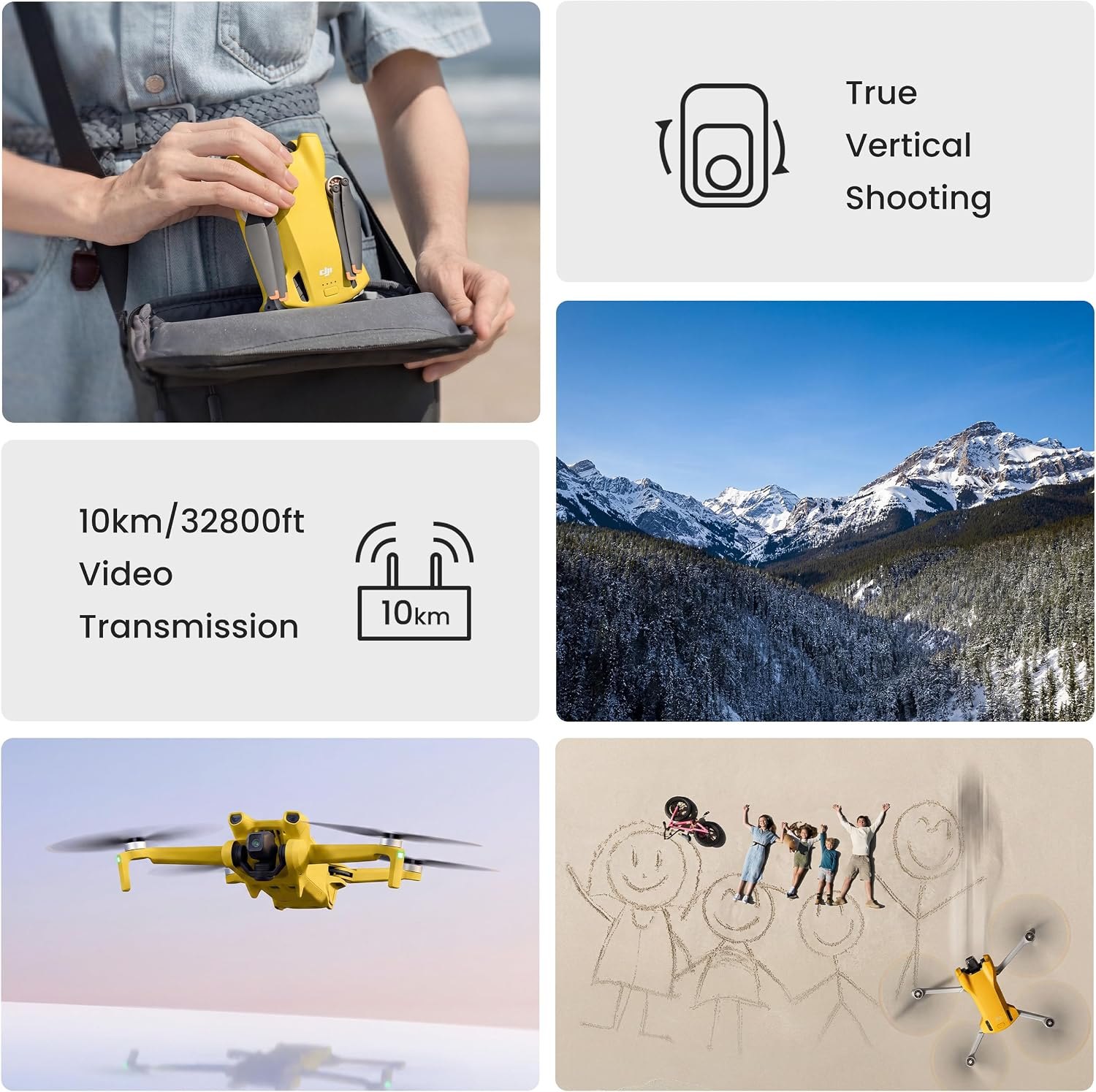
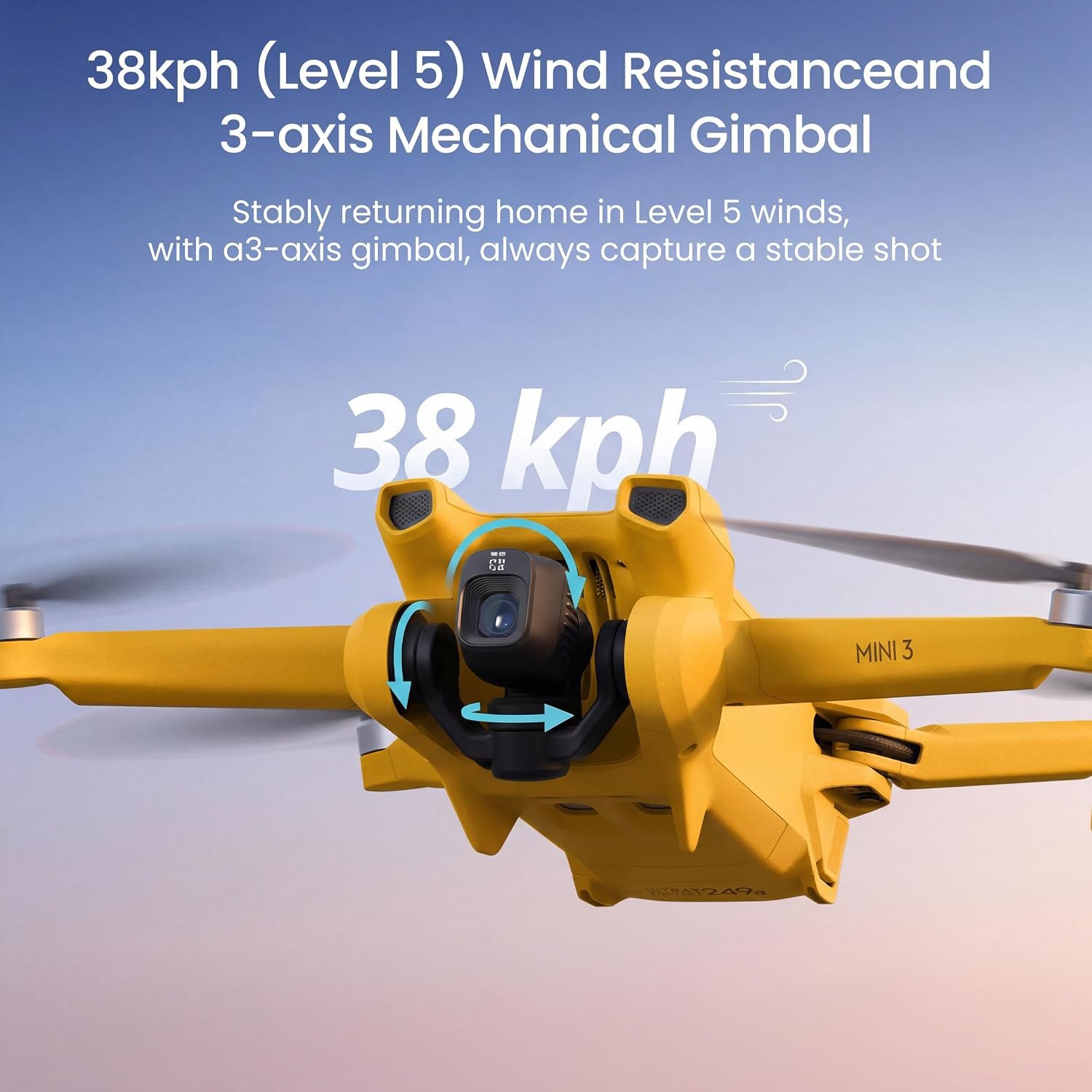
Folded, the Mini 3 Pro measures 145 by 90 by 62 mm and stays under 249 g with the standard battery. The twin sensors on the nose and the pair facing rearward set it apart from the plain Mini 3, and the gimbal rotates for true vertical shooting so portrait video uses the whole sensor.
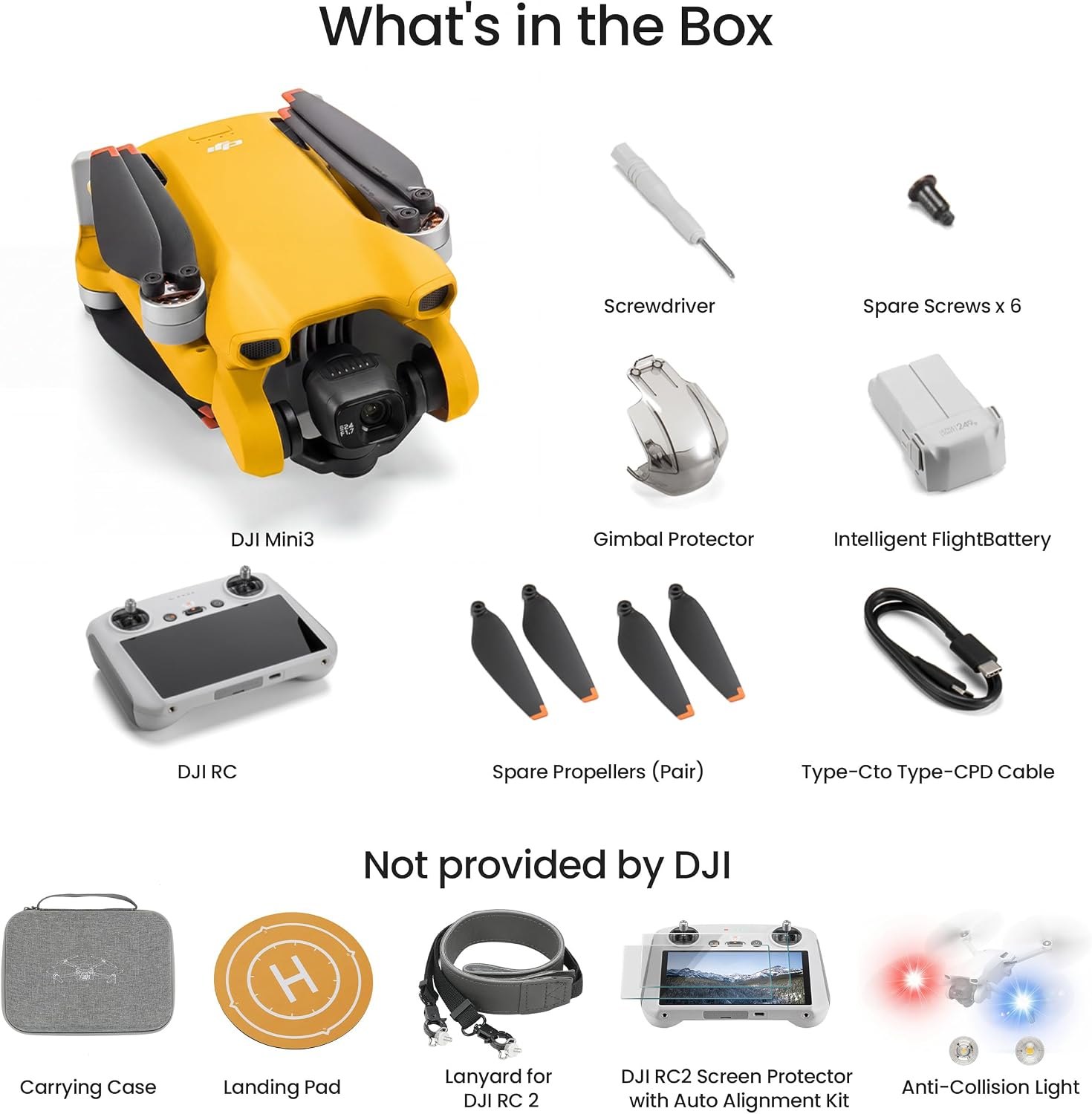
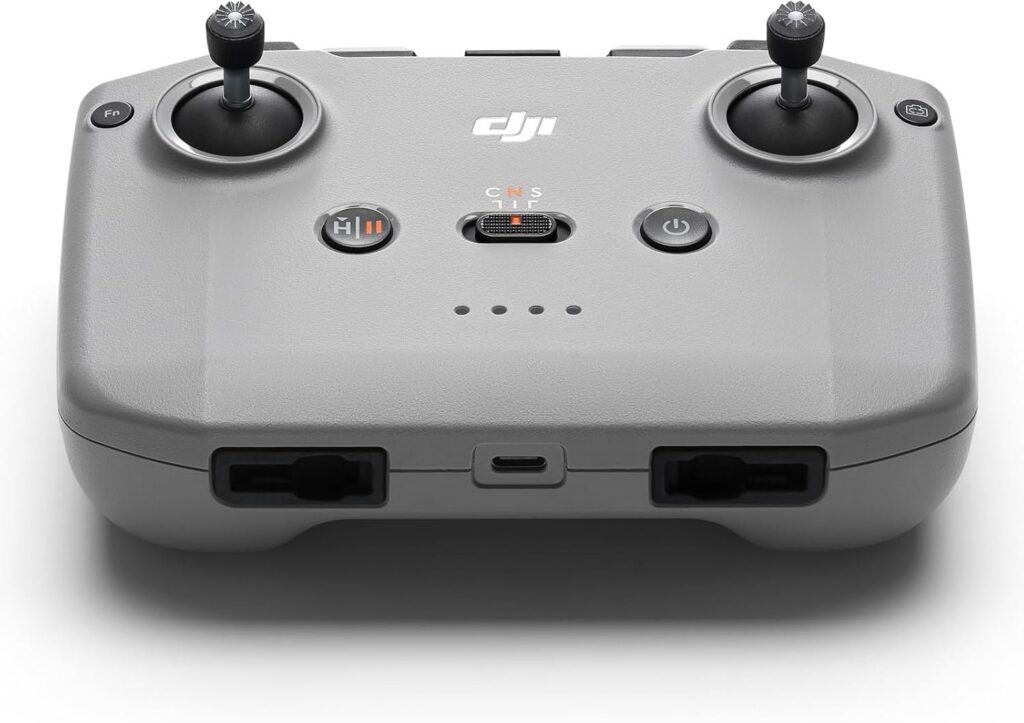
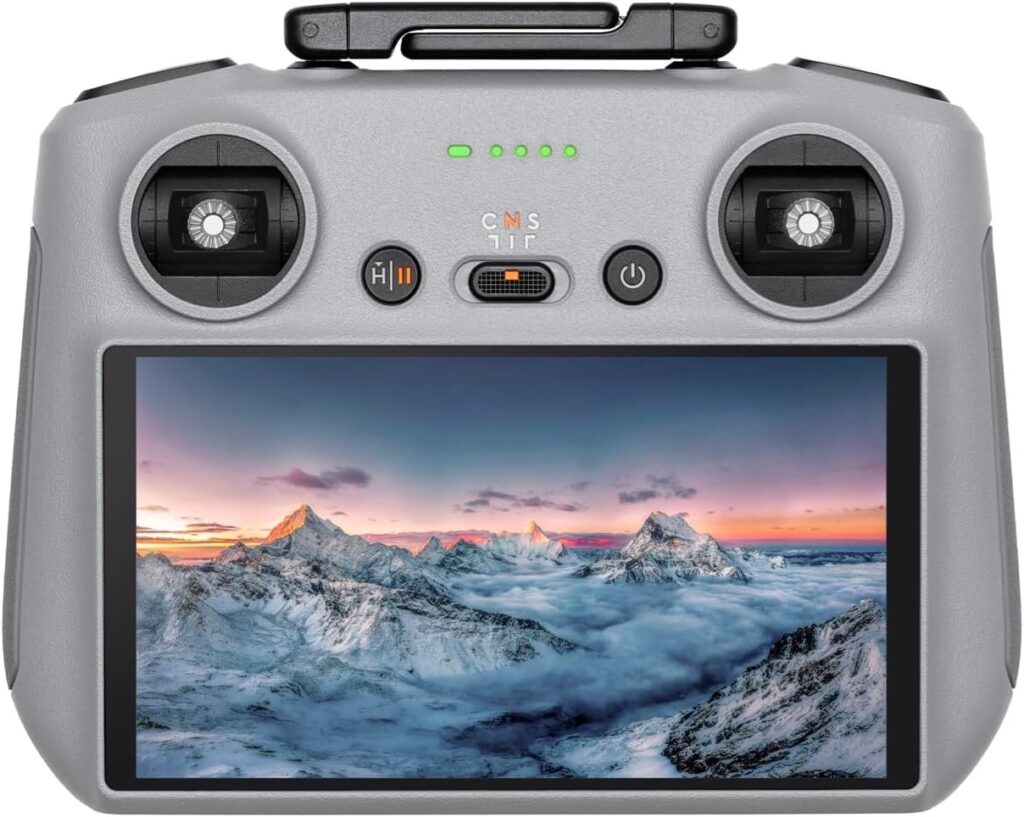
The Intelligent Flight Battery Plus extends flights but adds about 40 g, which tips the drone over 250 g. Kits came with the RC-N1, which uses your phone, or the DJI RC with its own screen; the drone was also sold on its own for owners with a compatible controller.
Camera and flight
The camera is a 1/1.3-inch, 48 MP sensor with dual native ISO behind a 24 mm equivalent f/1.7 lens. Video runs to 4K/60 and 1080p/120 for slow motion, at up to 150 Mbps, with HDR video available at 24 to 30 fps. The D-Cinelike profile gives you a flatter image to grade, though it is not the 10-bit D-Log M that later Minis offer.
On paper this was the camera that made the Mini line genuinely professional, and in daylight it still holds up well against newer sub-250 g drones. In low light the smaller-than-1-inch sensor shows its limits.
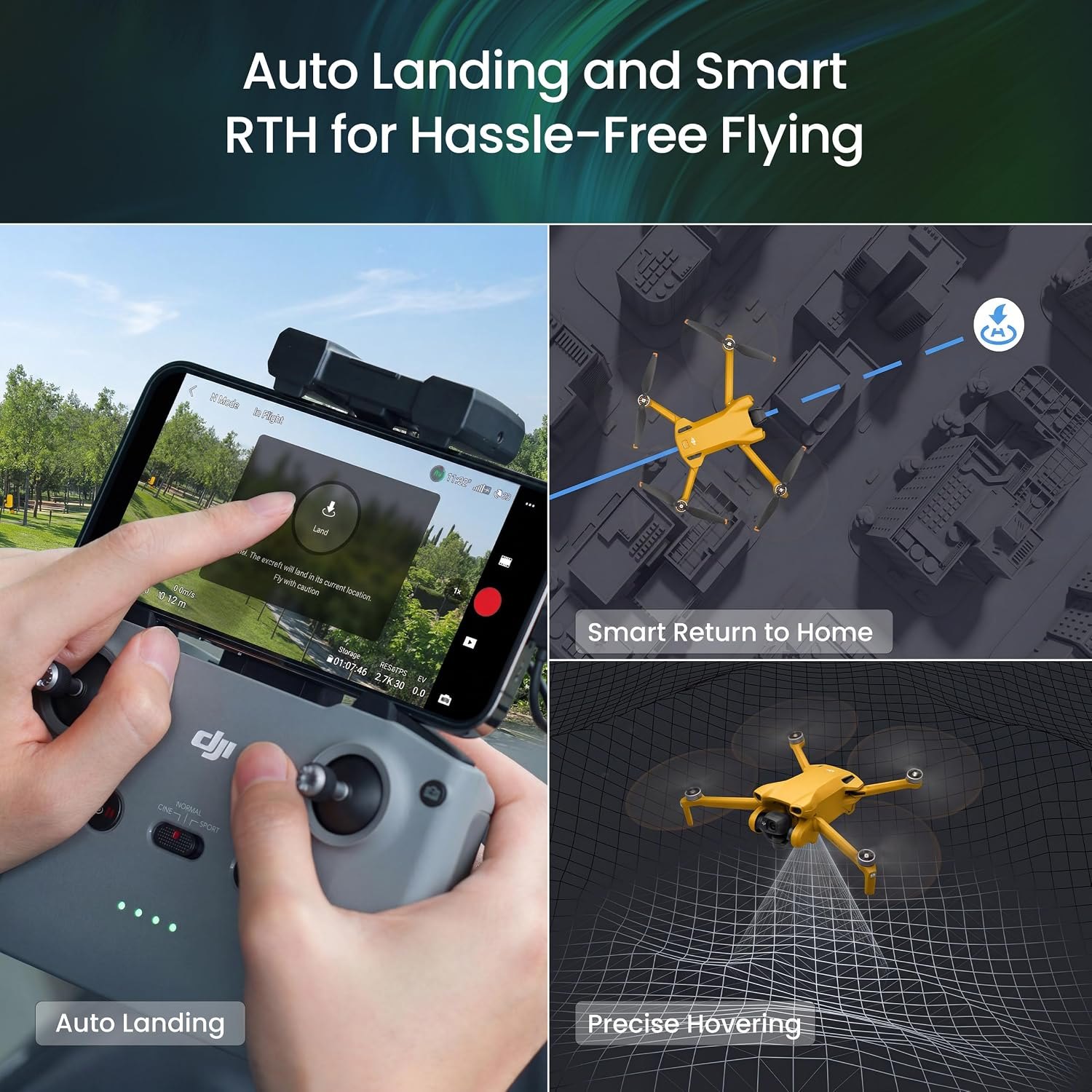
Flight time is rated at 34 minutes, or 47 with the Plus battery, and wind resistance at 10.7 m/s. The obstacle sensing covers forward, backward and downward, which supports ActiveTrack and APAS avoidance when flying in those directions. There is no side sensing, so lateral tracking shots near trees still need care. O3 transmission is rated to 12 km under FCC rules, with a 1080p live feed that is a clear step up from the O2 system on the Mini 3.
Living with it
The Mini 3 Pro uses the DJI Fly app. DJI shipped firmware v01.00.1000 in October 2026, the first update since July 2024, though it only fixes known issues; the last new features arrived in April 2023, including support for DJI Goggles 2 and RC Motion 2.
Regulation is not a concern for this model. It was authorized long before DJI joined the FCC Covered List in December 2025, and an FCC public notice from May 2026 lets previously authorized drones keep receiving updates until at least 2029. The real issue is supply. Check who is selling, whether the unit is new, open-box or renewed, and what warranty applies.
Value for money
The Mini 3 Pro launched at $669 for the drone alone, $759 with the RC-N1 and $909 with the DJI RC. Prices for remaining stock vary widely at the time of writing, and that is the deciding factor: the Mini 4 Pro, with omnidirectional sensing and 10-bit video, lists at $759 with the RC-N2 when it is in stock.
If a new Mini 3 Pro costs within $100 of a Mini 4 Pro, buy the newer drone. If you find a clean one far below that, it is still a capable camera.
Alternatives
- DJI Mini 4 Pro is the direct successor, adding omnidirectional sensing, 4K/100 and 10-bit D-Log M.
- DJI Mini 3 is the budget sibling, with the same sensor size and longer flights but no forward sensing or ActiveTrack.
- DJI Mini 5 Pro is the newest option, with a 1-inch sensor, though US availability and its weight are complications.
The bottom line
The Mini 3 Pro remains a very good sub-250 g camera drone, but it is now a deal-hunter’s purchase. Buy it only at a clear discount to the Mini 4 Pro, and from a seller whose return terms you trust.
.gap-review{margin:2.5rem 0 0}.gap-review h2{font-size:1.5rem;margin:0 0 1.25rem}.gap-verdict{background:#0E1A2B;color:#fff;border-radius:16px;padding:1.5rem 1.75rem}.gap-verdict__head{display:flex;gap:1.25rem;align-items:center}.gap-score{margin:0;width:84px;height:84px;border-radius:50%;background:#FF5A1F;color:#fff;display:flex;flex-direction:column;align-items:center;justify-content:center;font-weight:800;font-size:1.9rem;line-height:1}.gap-score small{font-size:.7rem;font-weight:600;opacity:.85}.gap-eyebrow{margin:0 0 .35rem;text-transform:uppercase;letter-spacing:.08em;font-size:.75rem;font-weight:700;color:#FF5A1F}.gap-verdict__line{margin:0;font-size:1.125rem;line-height:1.45}.gap-proscons{display:grid;grid-template-columns:1fr 1fr;gap:1.25rem 2rem;margin-top:1.5rem;padding-top:1.25rem;border-top:1px solid rgba(255,255,255,.15)}.gap-proscons h3{margin:0 0 .6rem;font-size:.9rem;text-transform:uppercase;letter-spacing:.05em;color:inherit}.gap-proscons ul{list-style:none;margin:0;padding:0}.gap-proscons li{position:relative;padding-left:1.6em;margin:0 0 .45em}.gap-proscons li::before{position:absolute;left:0;top:0;font-weight:800}.gap-pros li::before{content:’+’;color:#4ADE80}.gap-cons li::before{content:’2013′;color:#F87171}.gap-specs,.gap-faq{margin-top:2rem}.gap-specs h3,.gap-faq h3{font-size:1.2rem;margin:0 0 .75rem}.gap-specs table{width:100%;border-collapse:collapse;font-size:.95rem}.gap-specs th,.gap-specs td{text-align:left;padding:.65rem .9rem;border-bottom:1px solid #E2E8F0;vertical-align:top}.gap-specs th{width:38%;background:#F4F6F9}.gap-faq details{border:1px solid #E2E8F0;border-radius:10px;padding:0 1rem;margin:0 0 .6rem}.gap-faq summary{cursor:pointer;padding:.85rem 0;font-weight:600}.gap-cta{margin-top:2rem;padding:1.25rem 1.5rem;background:#F4F6F9;border-radius:16px;display:flex;flex-wrap:wrap;gap:.75rem;align-items:center}.gap-btn{display:inline-block;padding:.85em 1.5em;border-radius:10px;font-weight:600;text-decoration:none!important;background:#FF5A1F;color:#fff!important}.gap-btn–secondary{background:transparent;color:#0E1A2B!important;border:2px solid #E2E8F0}.gap-disclosure,.gap-note{font-size:.875rem;color:#4A5568;margin:.75rem 0 0}@media(max-width:640px){.gap-proscons{grid-template-columns:1fr}}
DJI Mini 3 Pro review
7.7/10
madagear.com verdict
Buy it if you find it well below Mini 4 Pro pricing and want 4K/60 without registration; skip it if you need side sensing or a current model with full retail support.
What we like
- Under 249 g with the standard battery, so no FAA registration for recreational flying
- 1/1.3-inch 48 MP sensor with 4K/60 and 1080p/120 video
- Forward and rear obstacle sensing plus ActiveTrack
- True vertical shooting from a rotating gimbal
- O3 transmission rated to 12 km under FCC rules
What we don’t
- No side obstacle sensing, unlike the Mini 4 Pro
- No longer sold by DJI USA; stock and pricing are inconsistent
- Last feature update was in 2023; recent firmware only fixes issues
- Light airframe gets pushed around in strong wind
Specs at a glance
| Takeoff weight | Under 249 g (standard battery); about 290 g with Battery Plus |
|---|---|
| Folded size | 145 x 90 x 62 mm |
| Camera | 1/1.3-inch CMOS, 48 MP, 24 mm equivalent, f/1.7 |
| Video | 4K up to 60 fps, 1080p up to 120 fps, up to 150 Mbps |
| Color | Normal and D-Cinelike |
| Flight time | Up to 34 min; 47 min with Intelligent Flight Battery Plus |
| Wind resistance | 10.7 m/s (Level 5) |
| Obstacle sensing | Forward, backward and downward |
| Transmission | DJI O3, up to 12 km (FCC) |
| Max speed | 16 m/s |
Frequently asked questions
Is the DJI Mini 3 Pro still worth buying?
At the right price, yes. Its camera and sensing still beat the Mini 3 and Mini 4K. But the Mini 4 Pro adds omnidirectional sensing and 10-bit video, so the Mini 3 Pro only makes sense with a clear discount.
Will the Mini 3 Pro keep getting firmware updates?
DJI released new firmware in October 2026, and an FCC public notice from May 2026 allows previously authorized foreign drones to receive updates until at least January 1, 2029. Recent updates fix issues rather than add features.
Do I need to register the DJI Mini 3 Pro?
Not for recreational flying in the US with the standard battery. With the Intelligent Flight Battery Plus it exceeds 250 g, so registration and Remote ID apply.
Does the Mini 3 Pro work with DJI goggles?
Yes. An April 2023 update added support for DJI Goggles 2, Goggles Integra and the RC Motion 2.
DJI’s US launch price with the RC-N1 controller (the drone alone was $669 and the DJI RC version $909). DJI USA no longer lists it, so Amazon listings come from remaining, third-party and renewed stock and prices vary. Price and availability checked on 2026-11-10.
madagear.com is reader-supported. When you buy through links on our site we may earn an affiliate commission, at no extra cost to you. This never affects what we recommend.

Reviews
There are no reviews yet.