



Description
Who it’s for
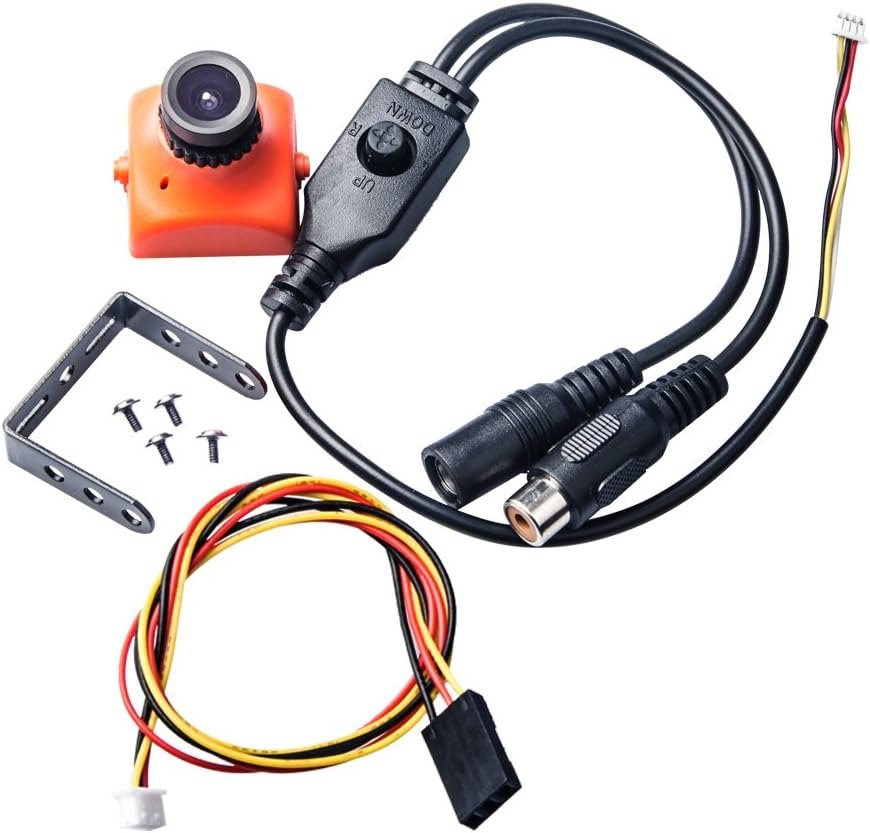
The AKK KC02 is aimed at a specific and shrinking group: pilots who want an analog FPV feed working today, on a budget, without researching which camera pairs with which transmitter. It bundles a 600mW 5.8GHz video transmitter with a 600TVL Sony CCD camera and wires the two together through a 5V output on the VTX, so a single battery lead powers the whole chain. For someone adding FPV to a fixed-wing trainer, a camera rover, or a first quadcopter build, that integration removes the most common beginner failure point.
It is not for the freestyle or racing crowd in 2026. Digital systems have taken over the performance end of the hobby, and even within analog, the current generation of CMOS cameras handles sun and shadow transitions better than a CCD sensor of this vintage. The listing’s own 7-20V limit, with an explicit warning against 6S packs, puts it outside most modern 5-inch builds, which run 6S as standard.
Where it still makes sense is on 3S and 4S platforms, on anything flying slowly enough that latency and resolution are not the limiting factor, and on builds where the cost of the FPV gear matters more than its ceiling. A park flyer, a cheap bashing quad, or a ground vehicle all fit that description.
Design and build
The transmitter uses an aluminum enclosure, which is the right choice for a 600mW unit. Analog VTXs at that power level generate real heat, and metal housings give it somewhere to go. The listing also notes cold and heat resistance as features, though without rated temperature figures those claims are worth little beyond confirming the design intent. The square shape is standard for this class and should mount in most frames with either tape or a plate.
Channel selection is handled by two buttons and two LED segments. That is a meaningful improvement over the DIP-switch transmitters still sold at this price, where changing bands means consulting a printed table. Two-button selection is not elegant, but it is doable at the flight line without a manual, which is what matters.
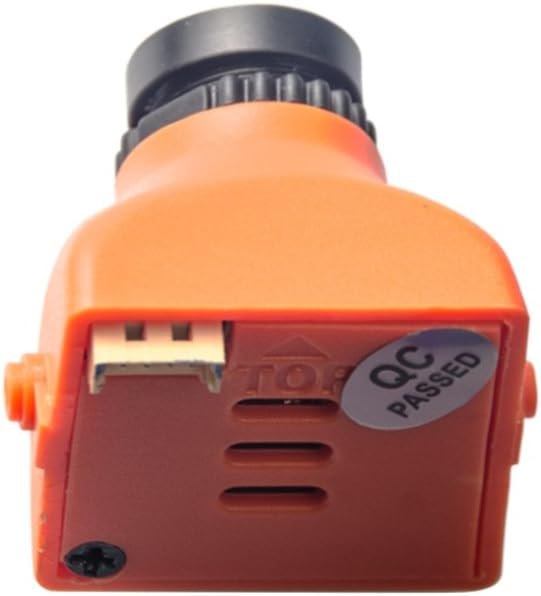
The camera is listed as a 1/3-inch Sony Super HAD II CCD paired with a Nextchip 2040 DSP and a 2.8mm lens giving roughly 120 degrees of view. That is a well-worn combination in analog FPV and was considered the quality option for years. The 2.8mm focal length is a sensible middle ground: wide enough for spatial awareness, not so wide that the edges distort into uselessness. Note that the kit is not water resistant, so dew, wet grass, and unplanned landings in damp conditions are all hazards.
What the specs tell us
On paper the numbers are coherent rather than impressive. 600TVL was a respectable analog resolution when this product class was current, and it remains perfectly legible in goggles, since analog transmission is the bottleneck long before the sensor is. What a CCD sensor historically did well is dynamic range: punching out of a shaded area into bright sky without the image washing to white. That characteristic is the main technical argument for this camera over a cheaper CMOS alternative.
The 7-20V input range is the specification to read carefully. It accommodates 2S through 4S, and the listing is unusually direct about 6S being out of bounds. A fully charged 6S pack sits at 25.2V, well past the ceiling, and connecting one is a reliable way to destroy the transmitter. Anyone on a 6S build needs a regulated supply or a different VTX.
600mW sits in the middle of the usual analog power ladder. In practice, antenna choice and line of sight dominate range far more than transmitter power does, so 600mW with good circular-polarized antennas will outperform a stronger transmitter with stock linear stubs. The camera is NTSC, which matters only if your goggles are locked to PAL.
Living with it
Buyer sentiment sits at 4.1 stars from just under 300 ratings, which for budget FPV electronics is a reasonable but not spotless picture. Ratings in that band for this category typically reflect a product that works as described for most people, with a tail of early failures and setup confusion. Owners of this class of gear commonly report heat as the thing to plan around: a 600mW transmitter sitting still on the bench with no airflow will get hot quickly, so power it up for configuration and then fly.
Setup should be straightforward given the integrated 5V camera feed. The practical tasks are mounting the camera at a usable tilt angle, keeping the transmitter antenna clear of carbon and props, and selecting a channel that does not collide with anyone else flying nearby. The two-button interface makes that last step manageable in the field.
The realistic longevity question is not whether the hardware lasts but whether the analog ecosystem around it does. Analog goggles, receivers, and channel conventions are all still widely supported, so the kit will remain usable. It simply will not improve, and the gap to digital will keep widening.
Value for money
At the time of writing, $38.99 buys both halves of a video system. Priced separately, a 600mW analog transmitter and a CCD camera of this description would land in a similar range, so the saving is less about a discount and more about not having to make two compatible purchasing decisions. For a first build, that is worth something on its own.
The counter-argument is opportunity cost. Spending somewhat more on a current-generation analog camera and a 6S-capable VTX buys a setup that will carry over to the next build, whereas this kit locks you to 4S and below. Whether that matters depends entirely on whether a 6S quad is in your future.
Alternatives
The RunCam Phoenix 2 paired with a separate VTX is the choice if image quality is the priority; it is a modern analog camera that handles tricky light far better, though it costs more and requires you to source a transmitter.
An AKK or Eachine 5.8GHz VTX bought on its own suits anyone who already has a camera, or who needs 6S compatibility and switchable power levels that this bundle does not offer.
A DJI or Walksnail digital FPV kit is the honest alternative for anyone starting fresh with a real budget, delivering a dramatically clearer feed at several times the price and requiring matching goggles.
The bottom line
The KC02 is a pragmatic bundle rather than a good camera and a good transmitter that happen to ship together. Its appeal rests almost entirely on removing the compatibility question from a beginner’s first FPV purchase, and on the low total outlay at the time of writing. Treat it as a way to get flying on a 4S-or-lower platform, and plan on replacing it rather than carrying it forward.
.gap-review{margin:2.5rem 0 0}.gap-review h2{font-size:1.5rem;margin:0 0 1.25rem}.gap-verdict{background:#0E1A2B;color:#fff;border-radius:16px;padding:1.5rem 1.75rem}.gap-verdict__head{display:flex;gap:1.25rem;align-items:center}.gap-score{margin:0;width:84px;height:84px;border-radius:50%;background:#FF5A1F;color:#fff;display:flex;flex-direction:column;align-items:center;justify-content:center;font-weight:800;font-size:1.9rem;line-height:1}.gap-score small{font-size:.7rem;font-weight:600;opacity:.85}.gap-eyebrow{margin:0 0 .35rem;text-transform:uppercase;letter-spacing:.08em;font-size:.75rem;font-weight:700;color:#FF5A1F}.gap-verdict__line{margin:0;font-size:1.125rem;line-height:1.45}.gap-proscons{display:grid;grid-template-columns:1fr 1fr;gap:1.25rem 2rem;margin-top:1.5rem;padding-top:1.25rem;border-top:1px solid rgba(255,255,255,.15)}.gap-proscons h3{margin:0 0 .6rem;font-size:.9rem;text-transform:uppercase;letter-spacing:.05em;color:inherit}.gap-proscons ul{list-style:none;margin:0;padding:0}.gap-proscons li{position:relative;padding-left:1.6em;margin:0 0 .45em}.gap-proscons li::before{position:absolute;left:0;top:0;font-weight:800}.gap-pros li::before{content:’+’;color:#4ADE80}.gap-cons li::before{content:’2013′;color:#F87171}.gap-specs,.gap-faq{margin-top:2rem}.gap-specs h3,.gap-faq h3{font-size:1.2rem;margin:0 0 .75rem}.gap-specs table{width:100%;border-collapse:collapse;font-size:.95rem}.gap-specs th,.gap-specs td{text-align:left;padding:.65rem .9rem;border-bottom:1px solid #E2E8F0;vertical-align:top}.gap-specs th{width:38%;background:#F4F6F9}.gap-faq details{border:1px solid #E2E8F0;border-radius:10px;padding:0 1rem;margin:0 0 .6rem}.gap-faq summary{cursor:pointer;padding:.85rem 0;font-weight:600}.gap-cta{margin-top:2rem;padding:1.25rem 1.5rem;background:#F4F6F9;border-radius:16px;display:flex;flex-wrap:wrap;gap:.75rem;align-items:center}.gap-btn{display:inline-block;padding:.85em 1.5em;border-radius:10px;font-weight:600;text-decoration:none!important;background:#FF5A1F;color:#fff!important}.gap-btn–secondary{background:transparent;color:#0E1A2B!important;border:2px solid #E2E8F0}.gap-disclosure,.gap-note{font-size:.875rem;color:#4A5568;margin:.75rem 0 0}@media(max-width:640px){.gap-proscons{grid-template-columns:1fr}}
AKK KC02 600mW FPV Transmitter and CCD Camera Kit review
6.4/10
madagear.com verdict
Buy it if you want the cheapest route to a working analog FPV feed on a hobby build or fixed-wing; skip it if you fly digital, run 6S, or need a camera that holds up in modern race and freestyle setups.
What we like
- VTX and camera sold as one kit, so no matching or wiring guesswork
- 1/3-inch Sony Super HAD II CCD with Nextchip 2040 DSP on paper
- Two-button, two-LED channel selection avoids DIP switch lookup tables
- 5V camera output from the VTX means one battery lead powers both
- Wide 7-20V input accepts 2S through 4S packs directly
- Aluminum enclosure on the transmitter helps shed heat at 600mW
What we don’t
- Explicitly not 6S safe, which rules out most current freestyle builds
- 600TVL analog resolution looks dated next to digital FPV systems
- NTSC only, so PAL goggle and DVR users need to switch modes
- Not water resistant, so wet grass landings are a real risk
Specs at a glance
| Brand | AKK |
|---|---|
| Model | KC02 (Mfr part K-C02) |
| Transmitter power | 600mW |
| Camera sensor | 1/3" Sony Super HAD II CCD |
| Camera resolution | 600TVL, NTSC |
| Lens | 2.8mm, 120 degree field of view |
| Operating voltage | 7-20V (2S-4S, not 6S) |
| Camera power output | 5V from VTX |
| Enclosure material | Aluminum |
| Water resistance | Not water resistant |
Frequently asked questions
Can I run this on a 6S battery?
No. The listing states a 7-20V operating range and specifically warns against 6S packs, which sit above that window when fully charged. Stick to 2S through 4S, or feed it from a regulated 12V rail if your build is 6S.
Do I need a separate camera if I buy this?
No, the camera is included and the transmitter supplies it with 5V, so the pair is designed to work together out of the box. That is the main reason to choose this over a bare VTX. You still need goggles or a receiver-equipped monitor on the ground.
Is the video feed PAL or NTSC?
The listing describes it as an NTSC CCD camera. Most modern analog goggles auto-detect the standard, but if yours is locked to PAL you will see a rolling or cropped image until you change the setting. Check your goggle menu before assuming the camera is faulty.
How far will 600mW get me?
Range on analog FPV depends far more on antennas and line of sight than on raw milliwatts. 600mW is a middle setting that comfortably covers park and field flying with decent circular-polarized antennas. Stock linear antennas will cut that considerably, and local power limits may apply where you fly.
At the time of writing the kit is $38.99, which covers both the transmitter and the camera together rather than a VTX alone, and street pricing on older analog gear like this tends to drift with stock levels rather than follow a season. Price and availability checked on 2026-11-14.
madagear.com is reader-supported. When you buy through links on our site we may earn an affiliate commission, at no extra cost to you. This never affects what we recommend.


Reviews
There are no reviews yet.