

Description
Who it’s for
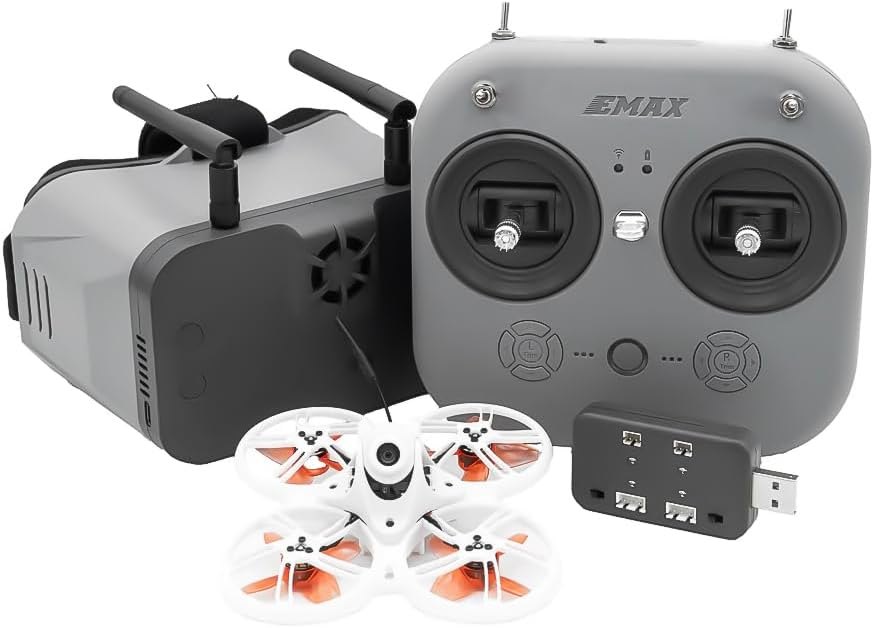
The Tinyhawk III Plus RTF kit is for someone who has never flown FPV and wants to start with real stick control rather than a self-stabilizing camera drone. Everything you need arrives in one box: the drone, a radio, goggles, a battery and a charger. It also suits a parent buying for a teenager, or a camera-drone owner who wants to learn acro flying without risking an expensive aircraft. It is not for someone who already owns an ExpressLRS radio and goggles; in that case the drone alone, sold as a bind-and-fly, costs far less.
Design and build
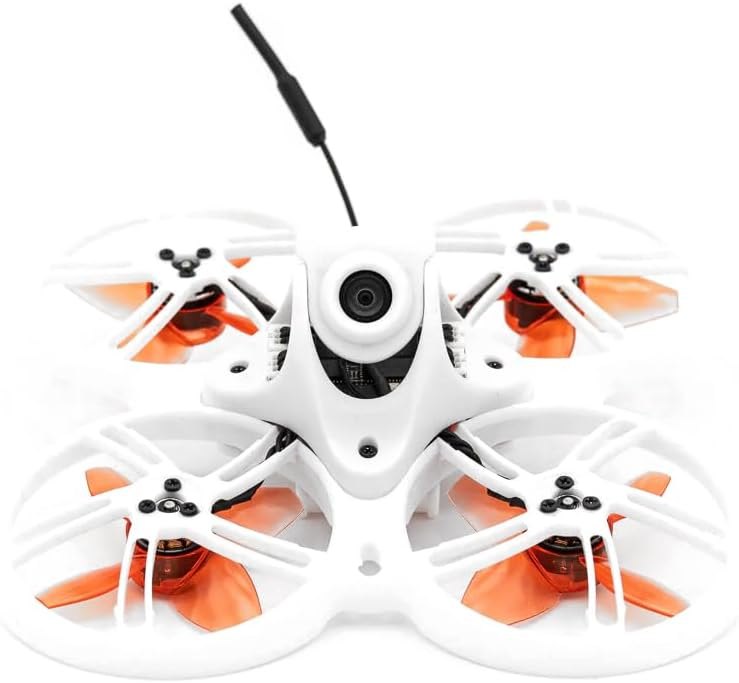
The drone is a 76 mm whoop: four small props inside a molded plastic duct, with the flight electronics and camera sitting under a canopy in the middle. It weighs about 32.5 g without the battery and runs on a single 1S HV 650 mAh pack, which EMAX supplies in the kit. The all-in-one board is rated for 1S and 2S and carries the ExpressLRS 2.4 GHz receiver, so there is nothing to wire or bind beyond what EMAX has already done. Video comes from a RunCam Nano analog camera through a 40-channel transmitter switchable between 25, 100 and 400 mW.
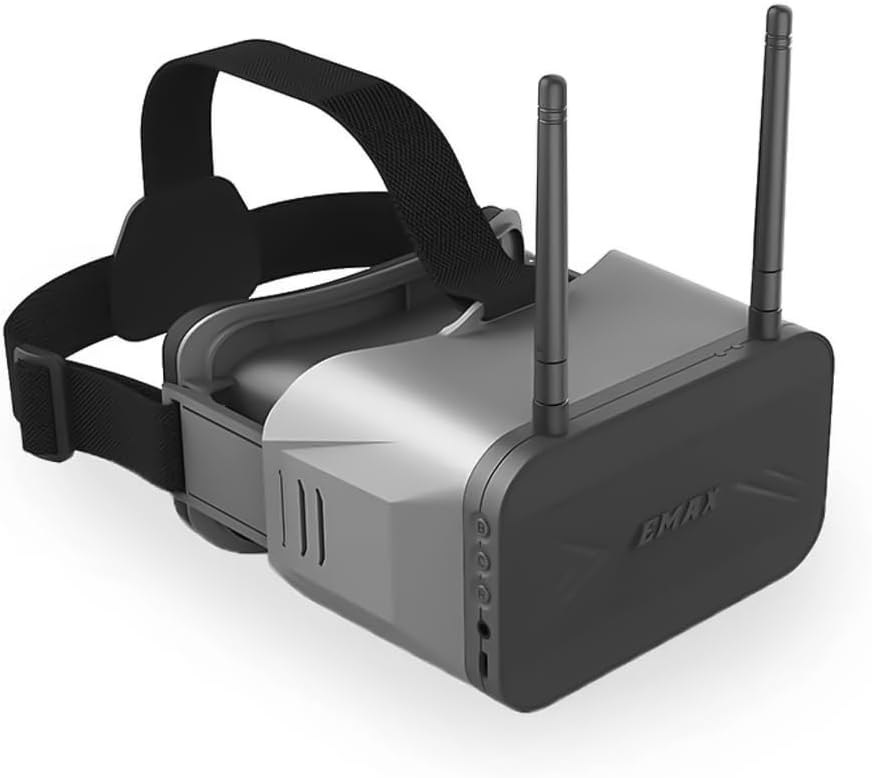
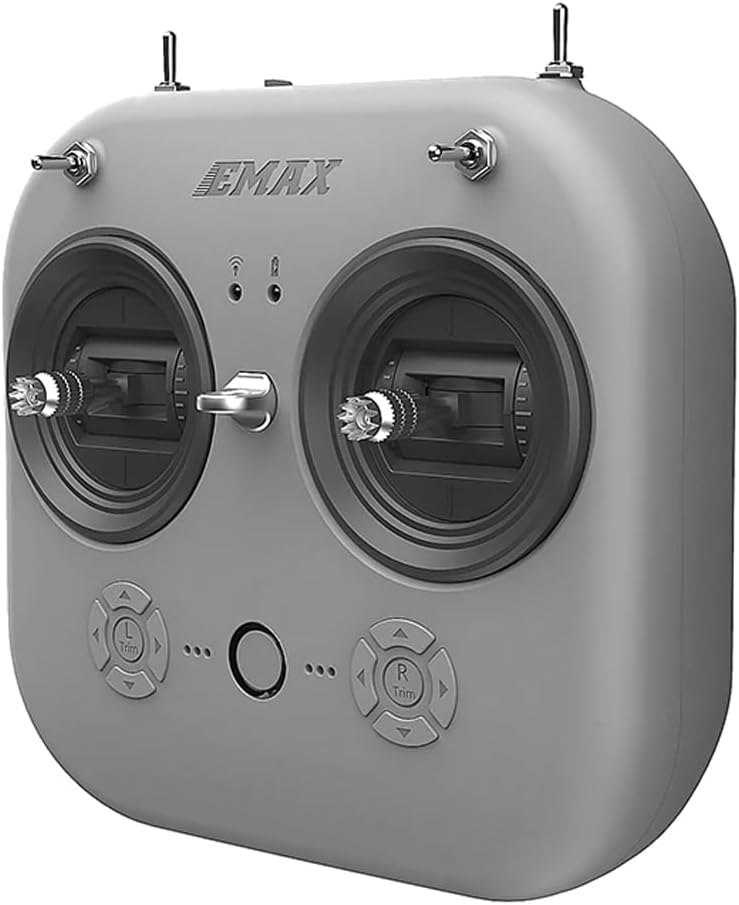
The radio is EMAX’s E8, a compact eight-channel ExpressLRS transmitter powered by an 18650 cell and charged over USB. The goggles are the Transporter 2, a box-style headset with a 4.3-inch 480 x 800 screen, a built-in DVR that records to microSD and a 1300 mAh battery. They are not small or sharp, but they work, and they will serve any analog drone you buy later.
Flight and learning curve
On 1S the Tinyhawk III Plus is tuned to be manageable rather than wild, which is what a first FPV drone should be. The duct means that most of your early crashes, into door frames, chair legs or the ceiling, end with the drone on the floor rather than in pieces. Indoors you will want the VTX at 25 mW to keep the signal clean in a small space; outside, 400 mW and the ELRS link give you room to fly around a yard or a small park. What you will not get is footage worth keeping. Analog video is grainy and the DVR records what you see in the goggles, which is useful for reviewing crashes but nothing more.
The most important thing to know is that this is a manual FPV drone. There is no GPS, no position hold and no return-to-home. If you have never flown FPV, the common advice from experienced pilots is to practice in a simulator first; a few hours there will save you a lot of broken props.
Living with it
Flight time on a 1S whoop is measured in minutes, and one battery is not enough for a session. Budget for a handful of extra 650 mAh packs and a few sets of spare props from the start. Charging runs through the supplied USB charger. The drone is configured in Betaflight like any hobby quad, so as you progress you can change rates, modes and OSD settings yourself. In the US you need the free TRUST certificate, and at this weight there is no FAA registration for recreational flying. Analog FPV transmitters are generally operated under an amateur radio license in the US.
Value for money
At the time of writing EMAX USA sells the analog kit for $314.99, and RaceDayQuads lists it at $324.99. That is more than a budget toy kit, but the pieces are real hobby gear: the radio uses the same ExpressLRS protocol as far more expensive transmitters, and the goggles work with any analog drone you buy next. The HDZero version gives a much clearer image for considerably more money.
Alternatives
- BETAFPV Cetus X FPV Kit: pick it if you want BETAFPV’s beginner flight modes and a slightly lower price for the same kind of all-in-one starter box.
- BETAFPV Aquila16 FPV Kit: pick it if you want altitude hold and a gentler introduction before switching to full manual.
- DJI Avata 2: pick it if your goal is footage rather than learning to fly, and the budget stretches much further.
The bottom line
The Tinyhawk III Plus RTF kit is a complete, honest starter package built on current standards. Buy extra batteries, practice in a simulator and you will have a whoop you can fly for years and a radio that carries over to your next drone.
.gap-review{margin:2.5rem 0 0}.gap-review h2{font-size:1.5rem;margin:0 0 1.25rem}.gap-verdict{background:#0E1A2B;color:#fff;border-radius:16px;padding:1.5rem 1.75rem}.gap-verdict__head{display:flex;gap:1.25rem;align-items:center}.gap-score{margin:0;width:84px;height:84px;border-radius:50%;background:#FF5A1F;color:#fff;display:flex;flex-direction:column;align-items:center;justify-content:center;font-weight:800;font-size:1.9rem;line-height:1}.gap-score small{font-size:.7rem;font-weight:600;opacity:.85}.gap-eyebrow{margin:0 0 .35rem;text-transform:uppercase;letter-spacing:.08em;font-size:.75rem;font-weight:700;color:#FF5A1F}.gap-verdict__line{margin:0;font-size:1.125rem;line-height:1.45}.gap-proscons{display:grid;grid-template-columns:1fr 1fr;gap:1.25rem 2rem;margin-top:1.5rem;padding-top:1.25rem;border-top:1px solid rgba(255,255,255,.15)}.gap-proscons h3{margin:0 0 .6rem;font-size:.9rem;text-transform:uppercase;letter-spacing:.05em;color:inherit}.gap-proscons ul{list-style:none;margin:0;padding:0}.gap-proscons li{position:relative;padding-left:1.6em;margin:0 0 .45em}.gap-proscons li::before{position:absolute;left:0;top:0;font-weight:800}.gap-pros li::before{content:’+’;color:#4ADE80}.gap-cons li::before{content:’2013′;color:#F87171}.gap-specs,.gap-faq{margin-top:2rem}.gap-specs h3,.gap-faq h3{font-size:1.2rem;margin:0 0 .75rem}.gap-specs table{width:100%;border-collapse:collapse;font-size:.95rem}.gap-specs th,.gap-specs td{text-align:left;padding:.65rem .9rem;border-bottom:1px solid #E2E8F0;vertical-align:top}.gap-specs th{width:38%;background:#F4F6F9}.gap-faq details{border:1px solid #E2E8F0;border-radius:10px;padding:0 1rem;margin:0 0 .6rem}.gap-faq summary{cursor:pointer;padding:.85rem 0;font-weight:600}.gap-cta{margin-top:2rem;padding:1.25rem 1.5rem;background:#F4F6F9;border-radius:16px;display:flex;flex-wrap:wrap;gap:.75rem;align-items:center}.gap-btn{display:inline-block;padding:.85em 1.5em;border-radius:10px;font-weight:600;text-decoration:none!important;background:#FF5A1F;color:#fff!important}.gap-btn–secondary{background:transparent;color:#0E1A2B!important;border:2px solid #E2E8F0}.gap-disclosure,.gap-note{font-size:.875rem;color:#4A5568;margin:.75rem 0 0}@media(max-width:640px){.gap-proscons{grid-template-columns:1fr}}
EMAX Tinyhawk III Plus RTF Kit review
8.0/10
madagear.com verdict
Buy it if you want everything you need to start flying FPV in one box and plan to fly indoors or in the yard; skip it if you want to film anything you would keep or already own a radio and goggles.
What we like
- Drone, radio, goggles, battery and charger in one box
- ExpressLRS 2.4 GHz link, the current standard, so the radio stays useful later
- Ducted 76 mm frame shrugs off walls, furniture and floors
- Transporter 2 goggles record DVR footage to a microSD card
- Analog VTX up to 400 mW is enough for the yard as well as the house
What we don’t
- Only one flight battery included, and 1S packs last a few minutes
- Box goggles are bulky and lower resolution than digital systems
- Analog camera footage is for flying, not for sharing
Specs at a glance
| Frame | 76 mm ducted whoop, 105 x 105 x 45 mm |
|---|---|
| Weight | Approx. 32.5 g without battery |
| Motors | TH0802 II 15000KV brushless |
| Flight controller | STM32F411 all-in-one board, 1-2S |
| Receiver | Built-in ExpressLRS 2.4 GHz |
| Camera | RunCam Nano analog |
| Video transmitter | 5.8 GHz analog, 40 channels, 0/25/100/400 mW |
| Battery | 1S HV 650 mAh (one included) |
| Radio | EMAX E8, ExpressLRS 2.4 GHz, 8 channels, 18650 cell |
| Goggles | EMAX Transporter 2, 4.3-inch 480 x 800 screen, DVR, approx. 398 g |
Frequently asked questions
Is the Tinyhawk III Plus RTF kit good for a complete beginner?
It is one of the more sensible ways in, because everything arrives together and the radio uses ExpressLRS. Spend a few evenings in a simulator with the E8 radio first; acro-style FPV takes practice, and a whoop forgives the crashes while you learn.
What should I buy on top of the kit?
More 1S HV 650 mAh batteries and spare props. One battery gives you a few minutes in the air, so most owners order a pack of four to six with the kit.
Do I need to register it or get a license?
At about 32 g plus battery it is well under the FAA 250 g registration threshold for recreational flying, though you still need the free TRUST certificate. Analog 5.8 GHz video in the US is generally operated under an amateur radio (Technician) license, which many FPV pilots get.
Analog or HDZero version?
Analog is the cheaper, more forgiving starting point and works with any analog goggles. HDZero gives a much sharper image but costs more and ties you to HDZero goggles.
Analog version with E8 ELRS radio and Transporter 2 goggles at EMAX USA; the HDZero RTF bundle costs considerably more. Price and availability checked on 2026-11-10.
madagear.com is reader-supported. When you buy through links on our site we may earn an affiliate commission, at no extra cost to you. This never affects what we recommend.


Reviews
There are no reviews yet.