




Description
Who it’s for
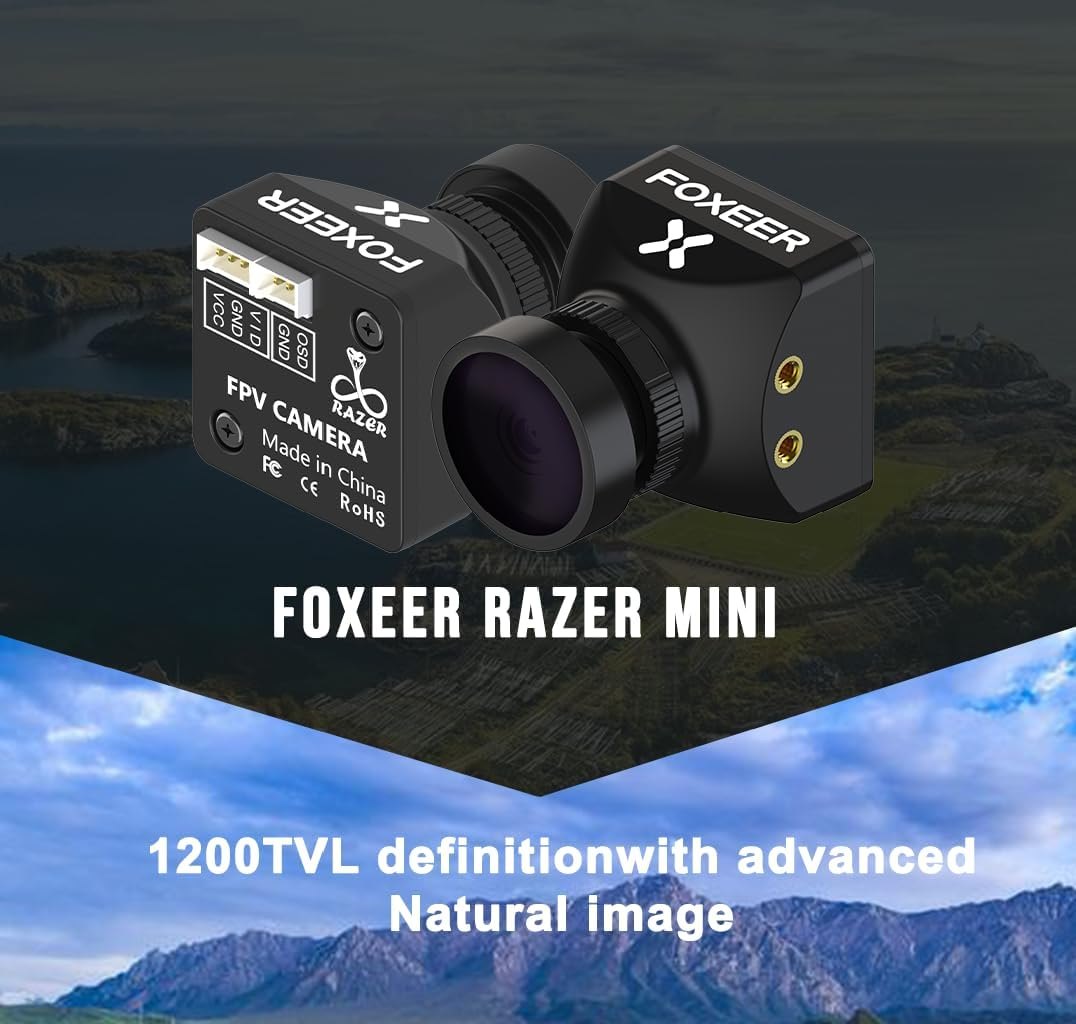
This is a camera for pilots who are still flying analog and have no plans to change. Analog FPV has not gone away, it has just stopped being the default, and the people who stay with it do so for good reasons: cheap goggles, cheap spares, latency that is low and predictable, and a signal that degrades into static rather than freezing. The Razer Mini V3 sits in the middle of that world, a 22x22mm micro camera in the size class most 3-inch to 5-inch frames are cut for.
If you are building a freestyle quad or a race rig and want a camera you can replace without much thought after a crash, this is the category you shop in. It also suits anyone rebuilding an older airframe, since the PAL/NTSC switch keeps it compatible with goggles and DVRs that predate the current generation of hardware.
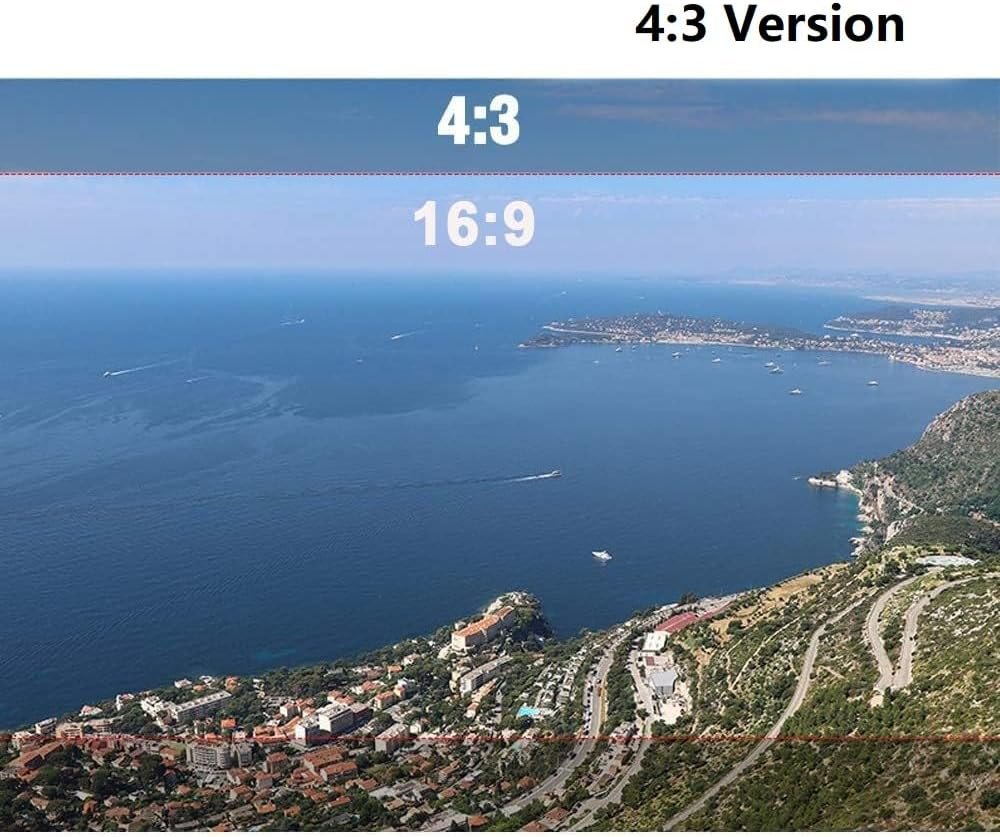
Who it is not for is simpler to state. Anyone running DJI, Walksnail or HDZero should stop reading here, because the analog CVBS output has no path into a digital system. The same goes for pilots who want a widescreen image, since this camera is 4:3 only.
Design and build
The form factor is the standard micro camera case, 22x22mm across the mounting ears, with the listing giving 0.87 inches on each dimension and 0.06 kg for the packaged weight. That is light enough that it will not meaningfully change how a 5-inch build handles, and small enough to tuck behind a tight camera plate without cutting the frame.
Foxeer has been iterating on the Razer line for several generations, and the shape and mounting pattern have stayed consistent across them. In practical terms that means spare brackets, 3D-printed mounts and replacement cages designed for earlier Razers are likely to carry over. For a part that lives at the front of a quad and takes the first hit in a crash, that kind of continuity is worth more than any single spec.
The lens is a 2.1mm at f/2.1. That is the wide end of what FPV pilots typically run, giving a broad field of view with the barrel distortion that goes along with it. It is fixed, so if you want a tighter, less distorted image you are swapping the lens rather than adjusting it.
What the specs tell us
On paper the headline numbers are a 1/3-inch CMOS sensor and 1200TVL of resolution. TVL is a horizontal resolution measure, not a pixel count, and in analog FPV it is a rough guide rather than a precise one, since what reaches your goggles depends as much on the VTX, the link quality and the goggle panel as on the camera. Still, 1200TVL on a 1/3-inch sensor is the combination that has defined competent analog cameras for several years now.
The shutter range of 1/25 to 1/10,000 seconds, adjusted automatically, is the specification that matters most for how the camera behaves in the air. A wide range is what lets a camera hold detail when you fly out of a shaded treeline into direct sun, which is the moment analog cameras most often fall apart. The listing also claims low-lux performance across sunny, cloudy and night conditions, which is a marketing framing of the same capability rather than a separate feature.
One thing to note: the listing’s detail table includes fields that do not apply to an analog FPV camera, among them a Micro SD slot, H.264 encoding, NFC and a 2.8-inch screen. Those are template fields, not features. Treat the sensor, resolution, lens, aspect ratio, shutter range and voltage input as the real specification and ignore the rest.
Living with it
The 4.5-25V input range is the quietly useful detail here. It means the camera will run off anything from a 1S whoop pack to a 6S lipo without a separate regulator, so you can wire it to a filtered VTX pad, a flight controller output, or the battery itself depending on how your build is laid out. Fewer constraints on power wiring means fewer compromises when you are routing a tight build.
Setup runs through the OSD board, which is where the PAL/NTSC switch and the image adjustments live. Buyers report a 4.4 average rating across 265 ratings, which is a solid result for a part in this price class, though as always with FPV hardware the spread of opinion tends to track how well people got the settings dialed in rather than the hardware itself. Expect to spend some bench time in the menu before the first flight.
The 4:3 output is the constraint you live with daily. If your goggles are 4:3 natively, you get the full frame. If they are 16:9, you either accept pillarboxing or stretch the image, and neither is ideal.
Value for money
At $34.99 at the time of writing, this lands in the normal band for a brand-name analog micro camera. No-name 1200TVL cameras sell for noticeably less, and the gap buys you a known manufacturer, a mount pattern with existing accessory support, and firmware behavior that other pilots have already documented.
What the price does not cover is anything beyond the camera and its OSD board. Budget separately for cable, connector and any cage or mount your frame needs. FPV camera prices tend to soften as newer revisions arrive, so if you are not in a hurry, waiting is rarely punished.
Alternatives
The RunCam Phoenix 2 is the obvious cross-shop at a similar price. Pick it if you prefer RunCam’s color rendering, which tends toward warmer and more saturated than Foxeer’s, or if you want a 16:9 option in the same size class.
The Foxeer Toothless 2 Micro is the one to choose if you fly a lot in harsh lighting. Its larger sensor is specifically pitched at dynamic range, and it is the better pick for dawn, dusk or heavy tree cover.
If your build is nano-class, look at a 14x14mm camera instead. The Razer Mini’s 22x22mm footprint is simply too large for the smallest frames, regardless of how good the image is.
The bottom line
The Razer Mini V3 is a safe, unexciting choice in the best sense: a known brand, a standard footprint and a specification sheet with nothing out of place for the money. The 4:3-only output and the analog-only interface are the two things that will decide whether it fits your setup, and neither is a flaw so much as a boundary. Check those first, and the rest of the decision is straightforward.
.gap-review{margin:2.5rem 0 0}.gap-review h2{font-size:1.5rem;margin:0 0 1.25rem}.gap-verdict{background:#0E1A2B;color:#fff;border-radius:16px;padding:1.5rem 1.75rem}.gap-verdict__head{display:flex;gap:1.25rem;align-items:center}.gap-score{margin:0;width:84px;height:84px;border-radius:50%;background:#FF5A1F;color:#fff;display:flex;flex-direction:column;align-items:center;justify-content:center;font-weight:800;font-size:1.9rem;line-height:1}.gap-score small{font-size:.7rem;font-weight:600;opacity:.85}.gap-eyebrow{margin:0 0 .35rem;text-transform:uppercase;letter-spacing:.08em;font-size:.75rem;font-weight:700;color:#FF5A1F}.gap-verdict__line{margin:0;font-size:1.125rem;line-height:1.45}.gap-proscons{display:grid;grid-template-columns:1fr 1fr;gap:1.25rem 2rem;margin-top:1.5rem;padding-top:1.25rem;border-top:1px solid rgba(255,255,255,.15)}.gap-proscons h3{margin:0 0 .6rem;font-size:.9rem;text-transform:uppercase;letter-spacing:.05em;color:inherit}.gap-proscons ul{list-style:none;margin:0;padding:0}.gap-proscons li{position:relative;padding-left:1.6em;margin:0 0 .45em}.gap-proscons li::before{position:absolute;left:0;top:0;font-weight:800}.gap-pros li::before{content:’+’;color:#4ADE80}.gap-cons li::before{content:’2013′;color:#F87171}.gap-specs,.gap-faq{margin-top:2rem}.gap-specs h3,.gap-faq h3{font-size:1.2rem;margin:0 0 .75rem}.gap-specs table{width:100%;border-collapse:collapse;font-size:.95rem}.gap-specs th,.gap-specs td{text-align:left;padding:.65rem .9rem;border-bottom:1px solid #E2E8F0;vertical-align:top}.gap-specs th{width:38%;background:#F4F6F9}.gap-faq details{border:1px solid #E2E8F0;border-radius:10px;padding:0 1rem;margin:0 0 .6rem}.gap-faq summary{cursor:pointer;padding:.85rem 0;font-weight:600}.gap-cta{margin-top:2rem;padding:1.25rem 1.5rem;background:#F4F6F9;border-radius:16px;display:flex;flex-wrap:wrap;gap:.75rem;align-items:center}.gap-btn{display:inline-block;padding:.85em 1.5em;border-radius:10px;font-weight:600;text-decoration:none!important;background:#FF5A1F;color:#fff!important}.gap-btn–secondary{background:transparent;color:#0E1A2B!important;border:2px solid #E2E8F0}.gap-disclosure,.gap-note{font-size:.875rem;color:#4A5568;margin:.75rem 0 0}@media(max-width:640px){.gap-proscons{grid-template-columns:1fr}}
Foxeer Razer Mini V3 FPV Camera review
8.1/10
madagear.com verdict
Buy it if you fly analog and want a proven micro-size camera with good low-light behavior for the money; skip it if your goggles or build are digital, or if you need a 16:9 widescreen image.
What we like
- 1200TVL on a 1/3" CMOS sensor, a well-proven combination for analog FPV
- Standard 22x22mm micro footprint drops into most freestyle and racing frames
- 4.5-25V input range means it runs off 1S through 6S setups without a regulator
- Switchable PAL and NTSC keeps it compatible with older goggles and DVRs
- Listed at roughly 60 g including hardware, light enough for nano and micro builds
- Shutter range of 1/25 to 1/10,000s helps it cope with bright-to-dark transitions
What we don’t
- 4:3 only, so no native widescreen for 16:9 goggle users
- Analog CVBS output, which rules it out for digital FPV systems
- 2.1mm is a fixed lens, so field of view is not adjustable without a swap
- The listing spec table contains fields that do not apply to an analog camera
Specs at a glance
| Brand | FOXEER |
|---|---|
| Sensor | 1/3-inch CMOS |
| Resolution | 1200TVL |
| Lens | 2.1mm, f/2.1 |
| Aspect ratio | 4:3 |
| Video standard | PAL / NTSC switchable, CVBS analog out |
| Shutter | 1/25 to 1/10,000s, automatic |
| Input voltage | 4.5-25V |
| Size | 22x22mm micro form factor |
| Weight | 0.06 kg as listed |
Frequently asked questions
Will this work with DJI or Walksnail goggles?
No. The Razer Mini V3 outputs CVBS analog video, which digital FPV systems do not accept as a camera input. You need analog goggles or a monitor with an analog receiver module.
Does the 22x22mm size fit my frame?
22x22mm is the standard micro camera mount used by most 3-inch to 5-inch freestyle and racing frames, so the odds are good. Measure the gap between your camera plates before ordering, since nano-class builds sometimes use the smaller 14x14mm standard instead.
Should I run PAL or NTSC?
PAL gives slightly more vertical resolution, NTSC gives a higher frame rate and marginally lower latency. Racers usually pick NTSC and freestyle pilots often prefer PAL, and the camera switches between them through the OSD menu.
Can I power it straight from the battery?
The listed 4.5-25V input range covers 1S through 6S, so a direct battery feed is within spec on most builds. Many pilots still run it off a filtered 5V or 9V pad on the flight controller or VTX to keep noise out of the video signal.
At $34.99 at the time of writing, the price covers the camera, its lens and the OSD board with no VTX or cabling bundle, and FPV camera pricing tends to drift down as newer revisions land and up during pre-holiday stock crunches. Price and availability checked on 2026-11-14.
madagear.com is reader-supported. When you buy through links on our site we may earn an affiliate commission, at no extra cost to you. This never affects what we recommend.



Reviews
There are no reviews yet.