

Description
Who it’s for
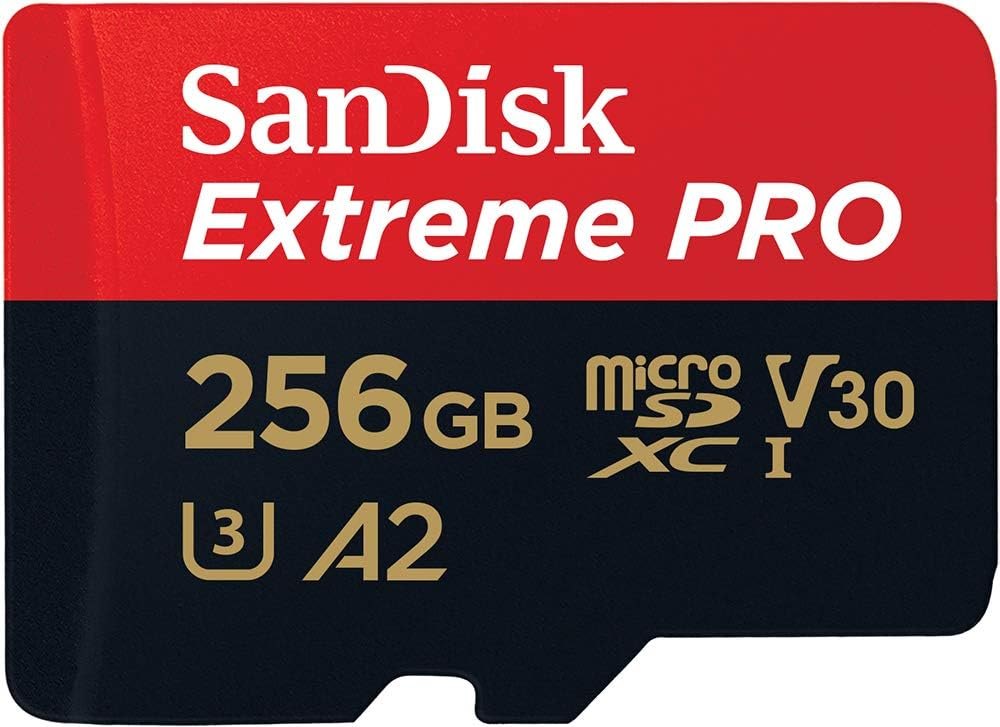
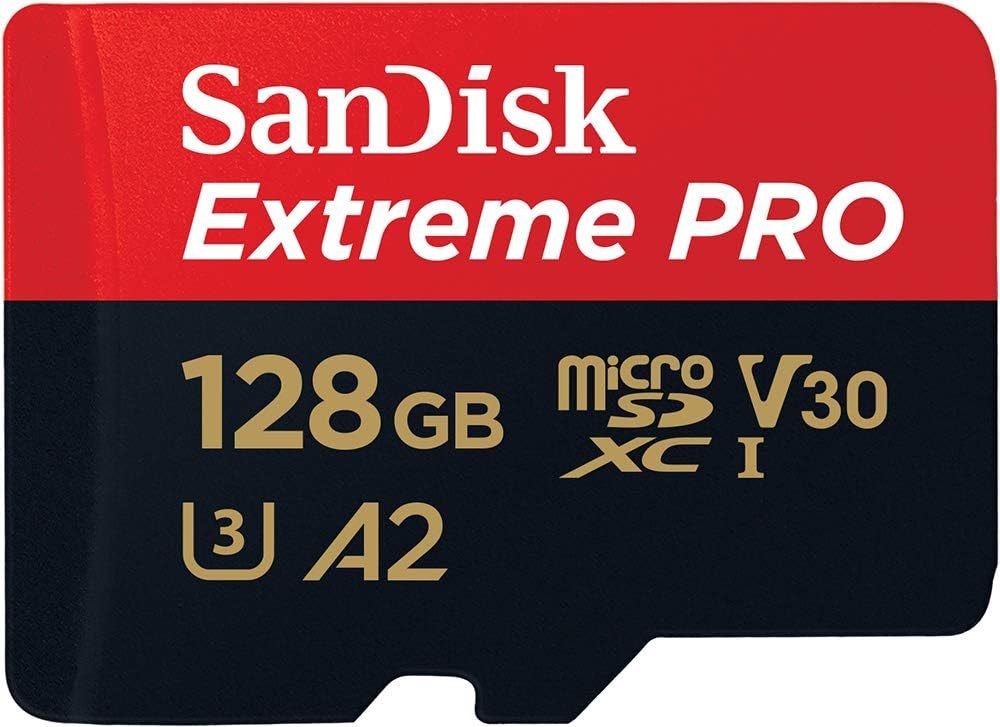
This is the card you buy because of what goes in your drone, not because of the card itself. A 256 GB microSDXC rated V30 is squarely aimed at people who record 4K video in long sessions: drone pilots flying multiple batteries in one outing, action-camera users, FPV pilots recording to DVR in goggles, and anyone who would rather carry one large card than juggle four small ones in a field case.
If your recording habits are lighter, the calculus changes. Shooting stills, 1080p clips or storing maps and music does not need a V30 card, and a U1 card at half the price will keep up without complaint. The speed class only earns its premium once your camera is writing a high-bitrate video stream continuously, which is exactly the situation where a slow card produces dropped frames or a recording that simply stops.
The other group worth naming is travelers. The listing claims drop, temperature, water and X-ray protection, and at 5 g the card is something you will inevitably carry loose in a pocket or a bag at some point. Those ratings are table stakes for premium cards now, but they are the right table stakes for gear that lives outdoors.
Design and build
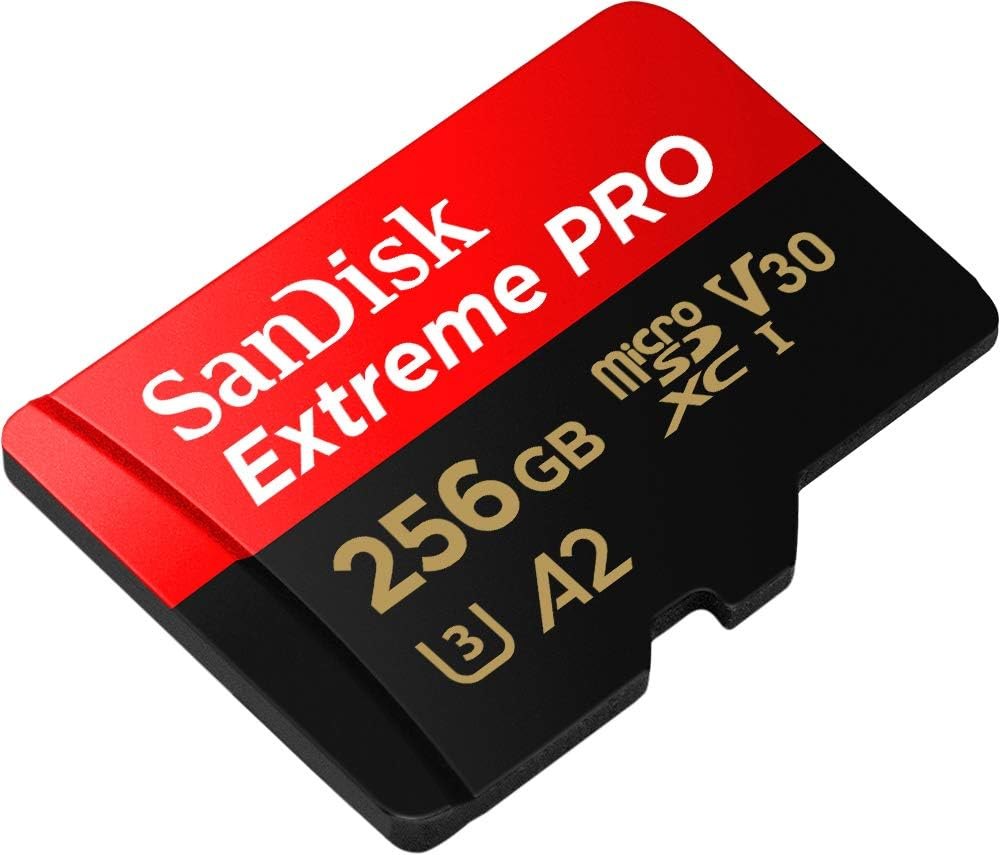
There is not much industrial design to discuss on a part measuring 0.6 by 0.4 inches, so build quality here means the durability claims and the predictability of the flash inside. SanDisk lists the card as drop proof, temperature proof, water proof and X-ray proof, which covers the realistic abuse path: dropped on tarmac at a flying field, left in a hot car, soaked in rain, or passed through airport security repeatedly.
The model number, SDSQXCD-256G-GN6MA, matters more than it looks. microSD cards are heavily counterfeited, and the Extreme PRO line is one of the most commonly faked. Buying from a seller you trust and checking that the printed model number matches is the single most useful thing you can do before the card ever goes into a device. Owners who end up with a card that reports 256 GB but corrupts data at 40 GB almost always received a fake rather than a defective genuine card.
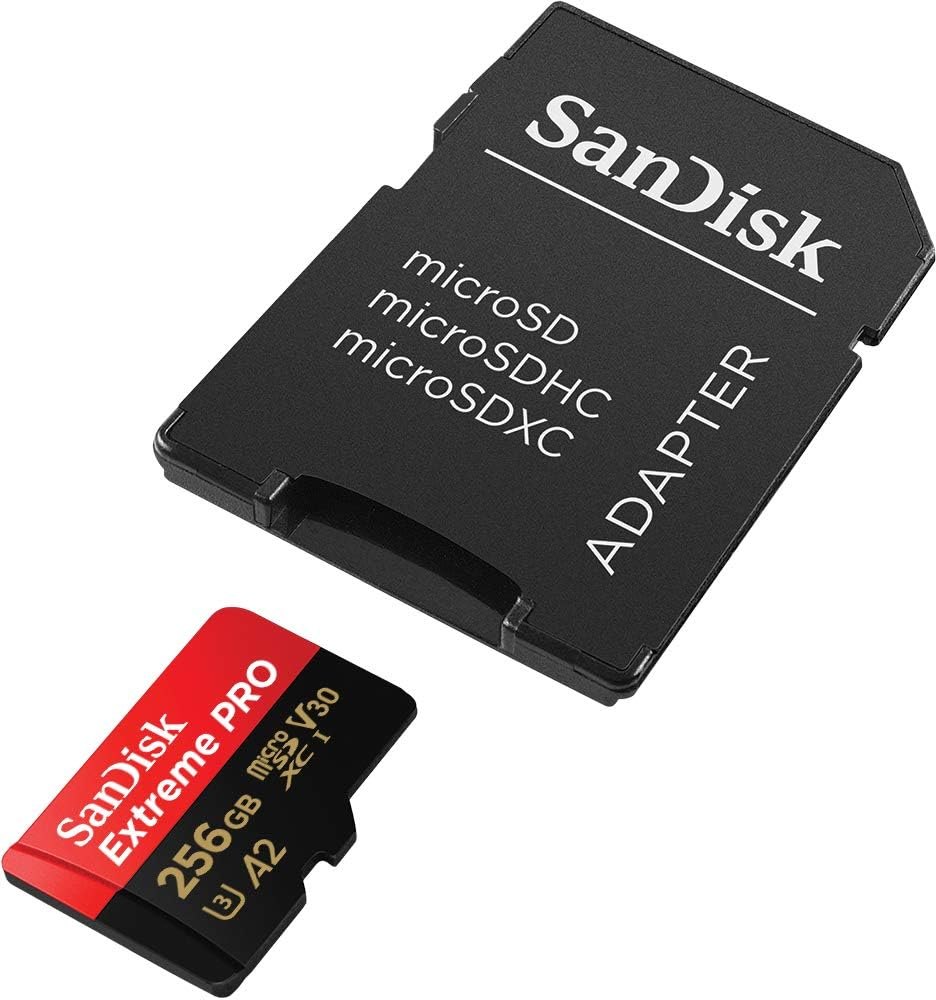
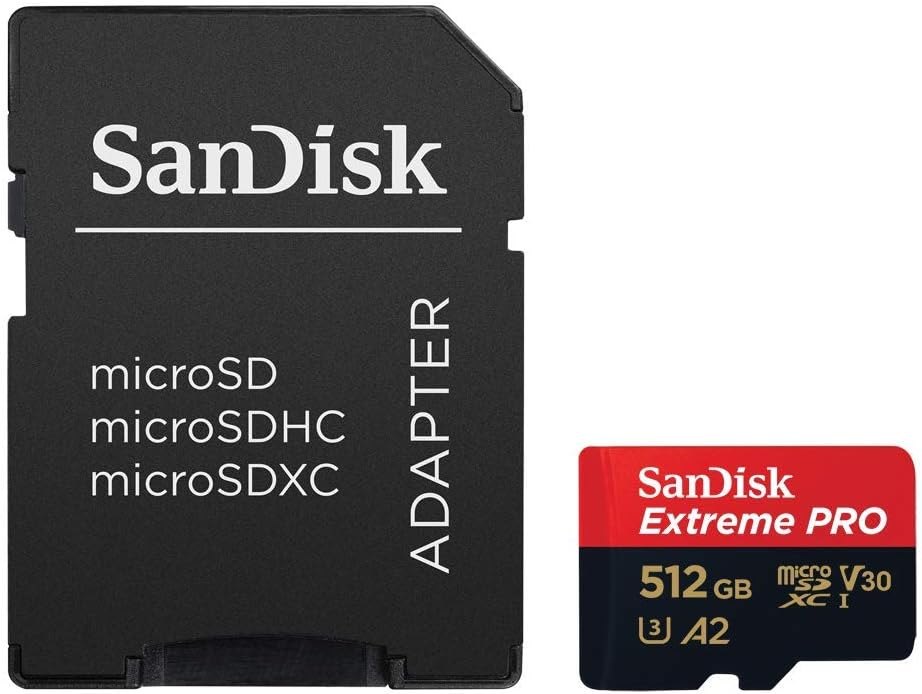
Physically, the card follows the standard microSDXC form factor and the listing specifies a single item with no adapter mentioned. That is worth noting if your workflow runs through a laptop with a full-size SD slot, since you will need to supply your own adapter or reader.
What the specs tell us
The headline figures are 200 MB/s read and a 140 MB/s media speed, with the bullet text separately describing a write speed of around 60 MB/s. Those numbers are not contradictory so much as describing different phases: flash cards burst fast into a cache and settle to a lower sustained rate once that cache fills. For video recording, the sustained figure is the one that decides whether a take survives.
The classification stack reads Class 10, UHS-I U3, V30. On paper that guarantees a sustained write floor of 30 MB/s, which is the number most consumer drones and action cameras quote as their minimum for 4K. Even taking the conservative 60 MB/s write figure at face value, the card has headroom above what V30 demands, and considerable headroom for the 100 Mbps-class bitrates typical of consumer drone video.
What the specs do not promise is V60 or V90 performance. Cameras that record ProRes, high frame rate 4K at elevated bitrates, or 5.7K and above will ask for a higher video speed class, and this card is not the right choice for them. Check the bitrate your specific camera writes at its highest setting rather than assuming a premium card covers every mode.
Living with it
At 256 GB, card swapping largely stops being part of the routine. A consumer drone recording 4K at roughly 100 Mbps fills around 45 GB per hour of footage, so the card covers a full day of flying with room left over. That changes field behavior: instead of managing cards between batteries, you offload once at the end of the day.
Offloading is where the 200 MB/s read rating pays off, though only if the rest of the chain keeps up. A cheap USB 2.0 reader will cap transfers far below the card’s rating, so a UHS-I capable reader is worth pairing with it. Buyers rate the card 4.8 out of 5 across more than 56,000 ratings, which for a storage product is about as strong a signal of consistency as the category produces.
The usual discipline still applies. Format the card in the device that will record to it rather than on a computer, keep a second card in the bag as insurance, and replace cards that have logged years of heavy write cycles. None of that is specific to this model, but a large card concentrates more of a shoot in one place, which raises the cost of a single failure.
Value for money
At the time of writing, $72.45 buys the 256 GB card and its limited warranty, with no reader or adapter listed. That is premium pricing for microSD, and it is only justified by the speed class and the brand’s record of predictable sustained write performance. Against unbranded cards claiming similar numbers, the gap is real, because the cheap cards frequently fail to hold their rated write speed under a continuous video stream.
Against other reputable V30 cards, the gap narrows considerably. Memory pricing swings hard with sales events and flash supply, and the same card can appear at meaningfully different prices across a few weeks. If you are not in a hurry, waiting for a discount is a reasonable strategy.
The case against paying this much is simple: if nothing you record needs V30, you are buying a guarantee you will never call on. That is a real scenario for pilots who mainly fly line-of-sight and record occasional clips rather than shooting seriously.
Alternatives
The Samsung PRO Plus microSDXC is the most direct competitor, offering similar U3 and V30 ratings from another manufacturer with its own fabs, and is worth taking if it undercuts the SanDisk on the day you buy. The Lexar Professional Silver Plus sits slightly below both on price while holding the V30 rating, making it the pick when budget matters more than brand record. If your camera asks for more than V30, step up to a V60 card such as the Angelbird AV PRO or the Extreme PRO’s V60-rated siblings rather than pushing this one past its class.
Within the same family, the 128 GB version of this card carries identical speed ratings and costs less. Two 128 GB cards cost about the same as one 256 GB card and spread the risk of a single failure across two pieces of media, at the cost of swapping cards mid-session.
The bottom line
As a storage decision this is straightforward: a well-rated V30 card at a capacity that removes card management from a day of flying, carrying a durability spec that suits outdoor gear and a buyer rating that suggests few surprises. The premium over a generic card is the price of predictable sustained writes, which is the only specification that actually determines whether a recording survives. Check what your camera asks for first, buy from a seller you trust given how often this line is counterfeited, and watch for a discount if timing is flexible.
.gap-review{margin:2.5rem 0 0}.gap-review h2{font-size:1.5rem;margin:0 0 1.25rem}.gap-verdict{background:#0E1A2B;color:#fff;border-radius:16px;padding:1.5rem 1.75rem}.gap-verdict__head{display:flex;gap:1.25rem;align-items:center}.gap-score{margin:0;width:84px;height:84px;border-radius:50%;background:#FF5A1F;color:#fff;display:flex;flex-direction:column;align-items:center;justify-content:center;font-weight:800;font-size:1.9rem;line-height:1}.gap-score small{font-size:.7rem;font-weight:600;opacity:.85}.gap-eyebrow{margin:0 0 .35rem;text-transform:uppercase;letter-spacing:.08em;font-size:.75rem;font-weight:700;color:#FF5A1F}.gap-verdict__line{margin:0;font-size:1.125rem;line-height:1.45}.gap-proscons{display:grid;grid-template-columns:1fr 1fr;gap:1.25rem 2rem;margin-top:1.5rem;padding-top:1.25rem;border-top:1px solid rgba(255,255,255,.15)}.gap-proscons h3{margin:0 0 .6rem;font-size:.9rem;text-transform:uppercase;letter-spacing:.05em;color:inherit}.gap-proscons ul{list-style:none;margin:0;padding:0}.gap-proscons li{position:relative;padding-left:1.6em;margin:0 0 .45em}.gap-proscons li::before{position:absolute;left:0;top:0;font-weight:800}.gap-pros li::before{content:’+’;color:#4ADE80}.gap-cons li::before{content:’2013′;color:#F87171}.gap-specs,.gap-faq{margin-top:2rem}.gap-specs h3,.gap-faq h3{font-size:1.2rem;margin:0 0 .75rem}.gap-specs table{width:100%;border-collapse:collapse;font-size:.95rem}.gap-specs th,.gap-specs td{text-align:left;padding:.65rem .9rem;border-bottom:1px solid #E2E8F0;vertical-align:top}.gap-specs th{width:38%;background:#F4F6F9}.gap-faq details{border:1px solid #E2E8F0;border-radius:10px;padding:0 1rem;margin:0 0 .6rem}.gap-faq summary{cursor:pointer;padding:.85rem 0;font-weight:600}.gap-cta{margin-top:2rem;padding:1.25rem 1.5rem;background:#F4F6F9;border-radius:16px;display:flex;flex-wrap:wrap;gap:.75rem;align-items:center}.gap-btn{display:inline-block;padding:.85em 1.5em;border-radius:10px;font-weight:600;text-decoration:none!important;background:#FF5A1F;color:#fff!important}.gap-btn–secondary{background:transparent;color:#0E1A2B!important;border:2px solid #E2E8F0}.gap-disclosure,.gap-note{font-size:.875rem;color:#4A5568;margin:.75rem 0 0}@media(max-width:640px){.gap-proscons{grid-template-columns:1fr}}
SanDisk Extreme PRO 256 GB microSDXC (V30 review
8.6/10
madagear.com verdict
Buy it if you shoot 4K on a drone, action camera or FPV goggles and want a card with a proven speed class behind it; skip it if you only need a card for stills or music storage, where a cheaper U1 card does the same job.
What we like
- V30 speed class is the rating most 4K drone and camera modes ask for
- 200 MB/s rated read speed makes offloading long clips less of a wait
- 256 GB holds a full day of 4K recording without card swaps on the field
- Rated drop, temperature, water and X-ray proof for travel and outdoor use
- Broad compatibility with microSDHC and microSDXC UHS-I host devices
- Buyers rate it 4.8 out of 5 across more than 56,000 ratings
What we don’t
- Listed write speed of around 60 MB/s is well below the 140 MB/s media figure
- Costs noticeably more than U1 cards that suffice for 1080p work
- No card reader or adapter listed in the box at this price
- Warranty is described only as limited, with no term stated
Specs at a glance
| Brand | SanDisk |
|---|---|
| Model | Extreme PRO (SDSQXCD-256G-GN6MA) |
| Capacity | 256 GB |
| Format | microSDXC |
| Read speed | 200 MB/s |
| Media speed | 140 MB/s |
| Video speed class | V30 |
| Speed class | Class 10, UHS-I U3 |
| Durability | Drop, temperature, water and X-ray proof |
| Weight | 5 g |
Frequently asked questions
Is a V30 card fast enough for 4K drone footage?
V30 guarantees a sustained write floor of 30 MB/s, which is the class most consumer drones and action cameras specify for their 4K modes. Higher bitrate modes on some cameras ask for V60 or V90, so check your camera’s manual before assuming the highest setting will work. For mainstream 4K at 60 to 150 Mbps, V30 is the right target.
Why does the listing mention both 60 MB/s and 140 MB/s write figures?
The bullet text quotes around 60 MB/s as the write speed, while the detail table lists a 140 MB/s media speed. Flash cards typically burst at the higher number into a fast cache and settle lower once that cache is full, so the sustained figure matters more for long recordings. Either way, both sit comfortably above the 30 MB/s that V30 requires.
Does it come with an SD adapter or reader?
The listing specifies a single item and does not mention an adapter or reader in the package. If your laptop only has a full-size SD slot or no slot at all, budget for a UHS-I reader separately. A cheap reader will also bottleneck the quoted 200 MB/s read speed, so pick one rated for UHS-I at minimum.
Will it work in older devices that only support microSDHC?
The listing states compatibility with microSDHC, microSDXC and the UHS-I versions of both. A microSDXC card needs a host that explicitly supports SDXC, so very old cameras and phones limited to SDHC will not read it. Check the device spec sheet for SDXC support before buying.
At the time of writing the card sells for $72.45, which covers the single 256 GB card with its limited warranty and nothing else; microSD pricing swings with sales events and flash supply, so the figure moves often. Price and availability checked on 2026-11-14.
madagear.com is reader-supported. When you buy through links on our site we may earn an affiliate commission, at no extra cost to you. This never affects what we recommend.



Reviews
There are no reviews yet.