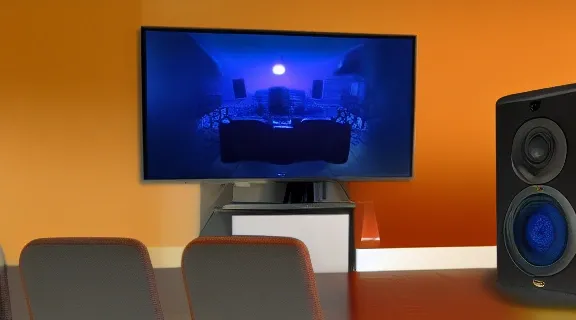
Gaming Room Acoustics: Master Your Sound for Immersion
Achieving truly immersive gaming requires more than just high-end visuals and a powerful rig; it hinges significantly on the quality of your audio. Understanding and improving your gaming room acoustics is paramount to hearing every crucial footstep, subtle cue, and explosive detail that draws you deeper into the virtual world. This guide will equip you with the knowledge to transform your gaming space into an auditory sanctuary, ensuring you gain a competitive edge and experience games as the developers intended.
Why Gaming Room Acoustics Matter
The sound you hear in your gaming setup is a product of two things: the audio source (your game's sound design) and the environment it travels through to reach your ears. Without attention to acoustics, your carefully crafted soundscapes can be degraded by reflections, echoes, and unwanted resonances, leading to a muddy, confusing, and less engaging experience.
The Impact of Poor Acoustics
Poor room acoustics can manifest in several detrimental ways for gamers:
- Loss of Detail: Subtle sound cues, like distant footsteps or the rustle of leaves, can be masked by reverberation, making it harder to discern crucial information.
- Reduced Spatial Awareness: Echoes and reflections can distort the perceived direction and distance of sounds, hindering your ability to pinpoint enemy locations or understand the game's audio environment.
- Listener Fatigue: Constant exposure to harsh reflections or an overly boomy sound can be fatiguing, detracting from longer gaming sessions.
- Compromised Immersion: When the sound feels artificial or unfocused, the suspension of disbelief shatters, pulling you out of the game world.
The Benefits of Optimized Acoustics
Conversely, a well-treated room offers significant advantages:
- Enhanced Clarity and Detail: Every sound is delivered crisply and distinctly, allowing you to appreciate the full spectrum of the game's audio design.
- Improved Positional Accuracy: Sound sources are accurately placed in the 3D space, providing a clear advantage in competitive titles where audio cues dictate enemy positions.
- Deeper Immersion: The soundstage becomes realistic and enveloping, pulling you into the game world with a palpable sense of presence.
- Reduced Listening Strain: A balanced acoustic environment is more comfortable to listen to for extended periods.
Understanding Sound Behavior in Your Room
Before implementing solutions, it's essential to grasp how sound interacts with surfaces in a typical room. Sound waves are energy that travels outwards from their source. When they encounter an object or surface, they can be absorbed, reflected, or diffracted.
Absorption, Reflection, and Diffusion
- Absorption: This is the process by which sound energy is converted into heat, reducing the amount of sound that bounces around the room. Soft, porous materials like foam, fabric, and fiberglass are good absorbers.
- Reflection: Hard, smooth surfaces like bare walls, glass, and floors reflect sound waves. Excessive reflection leads to echoes and reverberation, which can muddy the sound.
- Diffusion: This involves scattering sound waves in multiple directions. Diffusive surfaces are irregular and uneven, breaking up strong reflections and creating a more even sound field.
Common Acoustic Problems in Gaming Rooms
Gaming spaces, often situated in bedrooms or living rooms, are rarely designed with acoustics in mind. Common issues include:
- Flutter Echo: Rapid, repetitive reflections between parallel hard surfaces, often heard as a "fluttering" or "ringing" sound when you clap your hands.
- Room Modes (Standing Waves): At specific low frequencies, sound waves can reinforce or cancel each other out between parallel surfaces, leading to uneven bass response – some areas may have boomy bass, while others lack it entirely.
- Comb Filtering: Occurs when direct sound and reflected sound arrive at your ears at slightly different times, causing certain frequencies to be amplified and others to be attenuated, resulting in a hollow or "phasery" sound.
- Excessive Reverberation: The persistence of sound after the original sound source has stopped, caused by too many reflections in a room with too many hard surfaces.
Strategic Placement of Audio Equipment
The positioning of your speakers, headphones, and even your listening position plays a critical role in how you perceive sound. Optimizing this placement can mitigate some acoustic issues before you even add acoustic treatment.
Speaker Placement (If Applicable)
If you use monitor speakers for your gaming setup, their placement is crucial:
- The Equilateral Triangle: Position your speakers and your primary listening position (where you sit) to form an equilateral triangle. This ensures you receive a balanced stereo image.
- Distance from Walls: Avoid placing speakers too close to rear or side walls, as this can exaggerate bass frequencies and create problematic reflections. Aim for at least 1-2 feet away if possible.
- Tweeter Height: Ideally, the tweeters (the smaller drivers responsible for high frequencies) should be at ear level when you are in your seated gaming position.
- Toe-In: Experiment with angling your speakers slightly inward ("toe-in") towards your listening position. A common starting point is to aim them directly at your ears.
Headphone Usage Considerations
While headphones bypass many room acoustic issues by delivering sound directly to your ears, the soundstage they create is still influenced by the game's audio processing and your brain's interpretation.
- Virtual Surround Sound: Many games and headphone software offer virtual surround sound processing. While this can aid immersion, its effectiveness varies greatly and can sometimes artificially alter the spatial cues. Experiment to see if it benefits your gameplay or detracts from natural localization.
- Headphone Amplification: For higher-end headphones, a dedicated headphone amplifier can ensure they receive a clean, powerful signal, allowing their inherent acoustic performance and soundstage to shine through.
Listening Position Optimization
Your seat is your acoustic anchor. Its position within the room significantly impacts what you hear.
- Avoid the Room's Center: The exact center of a room is often an acoustic null for certain frequencies due to standing waves. Moving slightly forward or backward can improve bass response.
- First Reflection Points: Identify where sound from your speakers (or even ambient room noise) first bounces off walls, the ceiling, or the floor to reach your ears. Treating these points is highly effective.
Essential Acoustic Treatments for Gaming Rooms
Once your equipment is optimally placed, you can begin treating your room to control sound behavior. Acoustic treatments fall into three main categories: absorption, diffusion, and bass trapping.
Absorption Panels
Absorption panels are the most common form of acoustic treatment and are highly effective at reducing unwanted reflections and reverberation.
- Materials: Typically made from dense fiberglass, mineral wool, or acoustic foam, these panels are designed to absorb sound energy.
- Placement: The most critical placement areas are the first reflection points on your side walls and ceiling. You can find these by having a friend move a mirror along the wall while you sit in your listening position; anywhere you can see a speaker in the mirror is a first reflection point.
- Ceiling Clouds: Hanging absorption panels from the ceiling above your listening position (known as ceiling clouds) is extremely effective at taming ceiling reflections.
- DIY vs. Commercial: While commercial panels offer consistent performance, DIY options using rigid fiberglass insulation can be a cost-effective solution.
Bass Traps
Low frequencies (bass) are the most challenging to control in a room due to their long wavelengths. Bass traps are specifically designed to absorb these problematic low-end energies.
- Types:
- Porous Absorbers: Thick, dense broadband absorbers (often 4 inches or thicker) placed in room corners are highly effective at taming low frequencies. These are essentially very thick absorption panels.
- Resonant/Tuned Absorbers: These are more complex devices designed to target specific problematic bass frequencies. They are less common in typical gaming setups but offer precise control.
- Placement: Corners are the most effective locations for bass traps because bass energy naturally builds up there. The intersection of two walls and the floor, or two walls and the ceiling, are prime spots.
Diffusion Panels
Diffusion scatters sound waves, breaking up harsh reflections and creating a more natural, spacious sound. Unlike absorption, diffusion doesn't deaden the room but rather makes the sound field more even and lively.
- Design: Diffusers have irregular surfaces designed to reflect sound in many different directions and at different times. Common types include Quadratic Residue Diffusers (QRDs) and skyline diffusers.
- Placement: Diffusers are typically placed on the rear wall behind your listening position to scatter reflections that would otherwise bounce back directly to you. They can also be used on side walls after primary reflection points have been treated with absorption.
- Balancing Absorption and Diffusion: Most rooms benefit from a balance. Excessive absorption can make a room sound "dead" and unnatural. Diffusion helps maintain a sense of spaciousness while controlling problematic reflections.
Treating Your Gaming Space: A Step-by-Step Approach
Optimizing your gaming acoustics doesn't require a complete studio renovation. A targeted approach can yield significant improvements.
Step 1: Assess Your Room
- Listen Critically: Play familiar audio content (music, game clips) and listen for obvious issues like echo, boominess, or unevenness.
- Conduct a "Clap Test": Stand in the middle of your room and clap your hands sharply. Listen for the decay of the sound. A quick decay indicates good absorption, while a long, ringing decay suggests excessive reflection.
- Identify Hard Surfaces: Note all the bare walls, windows, large furniture, and hard flooring that could cause reflections.
Step 2: Strategic Speaker and Listening Position Setup
- Ensure your speakers and listening position form a roughly equilateral triangle.
- Pull speakers away from walls if possible.
- Place your listening position away from the exact center of the room.
Step 3: Address First Reflection Points
- Identify the first reflection points on your side walls and ceiling.
- Install absorption panels at these locations. Start with 2-inch thick panels if space is limited, but 4-inch panels will be more effective.
Step 4: Control Low Frequencies with Bass Traps
- Place thick absorption panels (or dedicated bass traps) in all four corners of the room. This is often the most impactful step for improving overall sound clarity.
Step 5: Consider Diffusion (Optional but Recommended)
- If the room still sounds a bit "dead" after absorption and bass trapping, or if you want to further enhance spaciousness, add diffusers to the rear wall.
Step 6: Evaluate and Refine
- Listen to your treated room. Does the bass feel tighter? Are sounds clearer? Is the soundstage wider?
- Make small adjustments to panel placement or add/remove treatment as needed. Acoustic treatment is often an iterative process.
Advanced Techniques and Considerations
For those seeking the ultimate in audio fidelity, several advanced techniques can further refine your gaming acoustics.
Room EQ (Equalization)
While acoustic treatment addresses the physical behavior of sound, Room EQ tackles the electronic correction of frequency imbalances.
- How it Works: Room EQ systems measure the frequency response at your listening position and apply digital filters to flatten out peaks and dips caused by room modes and other acoustic issues.
- Software Solutions: Tools like Room EQ Wizard (REW) are free and powerful for measuring room acoustics. This data can then be used to configure parametric EQs in devices like miniDSP processors, AV receivers, or dedicated DSPs.
- Trade-offs: EQ can correct frequency imbalances but cannot fix issues like poor imaging or excessive reverberation caused by reflections. It's best used after acoustic treatment has done its job.
Soundproofing vs. Acoustic Treatment
It's crucial to distinguish between soundproofing and acoustic treatment.
- Soundproofing: Aims to block sound from entering or leaving a room, typically involving mass, damping, and decoupling. This is complex and expensive, often requiring structural changes.
- Acoustic Treatment: Aims to control sound within a room, making it sound better for listening. This is what we've been discussing.
While acoustic treatment won't stop noise from bothering neighbors or prevent external noise from disturbing your game, it's essential for an optimal internal listening experience.
Room Shape and Size
The dimensions of your room significantly impact its acoustic characteristics.
- Square Rooms: Highly problematic due to strong, reinforcing standing waves.
- Rooms with Parallel Surfaces: Generally more challenging acoustically than rooms with irregular shapes or non-parallel walls.
- Ceiling Height: Affects vertical standing waves; a standard 8-foot ceiling is common but can present specific challenges.
There's no perfect room shape, but understanding how your room's dimensions interact with sound can help prioritize treatment strategies.
Frequently Asked Questions
What is the most important acoustic treatment for a gaming room?
The most impactful treatments for a gaming room are typically absorption panels placed at the first reflection points on side walls and ceilings, and bass traps installed in the corners. These address the most common issues of echo, muddiness, and uneven low-frequency response, significantly enhancing clarity and immersion.
Do I need professional acoustic treatment for my gaming room?
Not necessarily. While professional acoustic consultants can provide precise solutions, you can achieve substantial improvements with well-placed DIY or commercially available acoustic panels and bass traps. Focus on understanding the fundamental principles of absorption, reflection, and diffusion.
How much does it cost to treat a gaming room for acoustics?
Costs can vary widely. Basic DIY absorption panels might cost under $100-$200. Mid-range commercial panels and bass traps for a small to medium-sized room could range from $300-$1000. High-end, custom solutions can cost several thousand dollars. The investment depends on the materials used and the desired level of perfection.
Will acoustic foam panels work for my gaming room?
Acoustic foam panels can offer some benefit, particularly for high-frequency absorption, but they are generally less effective than panels made from denser materials like fiberglass or mineral wool, especially for mid and low frequencies. For optimal results, denser materials are recommended, particularly for bass trapping.
Conclusion: Elevate Your Game with Superior Sound
Optimizing your gaming room acoustics is a powerful, often overlooked, method for dramatically improving your gaming experience. By understanding how sound behaves and strategically applying acoustic treatments, you can eliminate distracting reflections, tighten bass, and create a clear, immersive soundstage. This allows you to hear every detail, react faster, and lose yourself completely in the virtual worlds you explore. Start by identifying your room's specific acoustic challenges and implement targeted solutions, and you'll soon be playing games with an unprecedented level of audio fidelity.
