

Description
Who it’s for
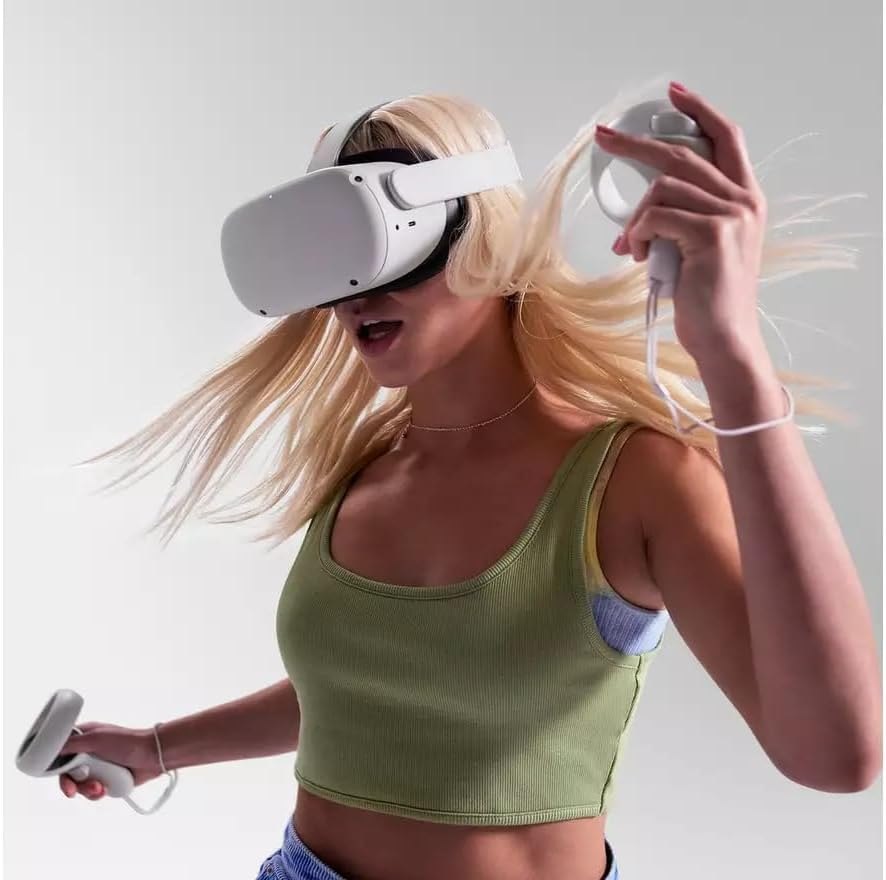
The Quest 2 is aimed squarely at the person who has never owned a VR headset and does not want to buy a gaming PC to get one. Everything runs on the headset itself, which the listing confirms as a standalone platform, so the setup is: charge it, put it on, draw a boundary around your play space, start downloading. There is no sensor mounting, no cable routing, no GPU requirement to check.
That makes it a natural fit for three groups. Newcomers who want to try VR gaming without a four-figure commitment. People buying it for VR fitness, where the wireless freedom matters more than visual fidelity. And households buying a shared device, since passing a standalone headset between people is far easier than passing around a tethered rig.
It is a worse fit for anyone who already has a capable gaming PC and wants maximum visual quality, or for sim racing and flight sim enthusiasts chasing readable cockpit instruments. Those use cases reward resolution and field of view more than convenience, and this headset optimizes for the opposite.
Design and build
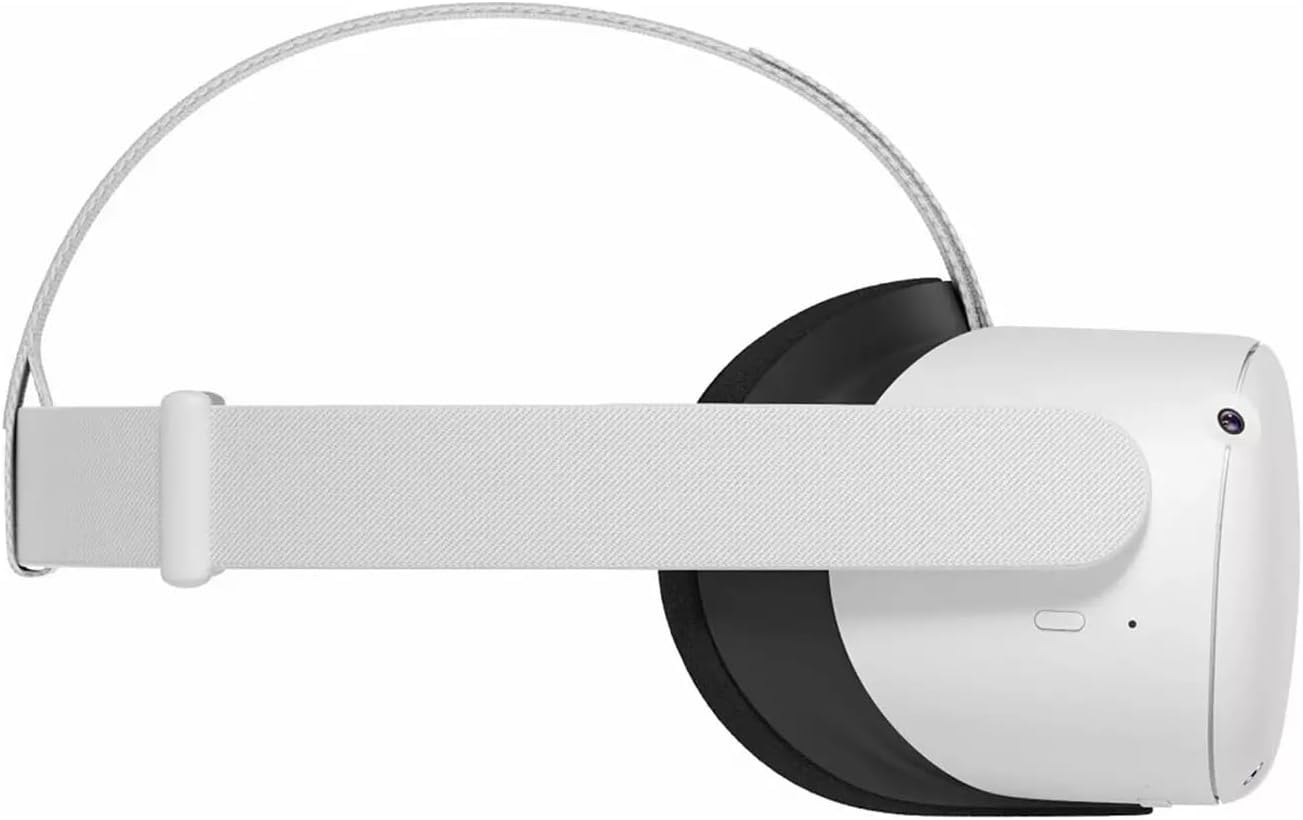
The listing gives dimensions of 10.24 by 7.36 by 4.96 inches in white, which is the familiar fabric-and-plastic Quest shape. It is a front-heavy design by nature, with the processor, battery and optics all sitting ahead of your face, and the stock soft strap distributes that weight across the top of the head rather than cradling the back of the skull.
That is the part worth planning for. Owners of headsets in this class consistently report that the first accessory purchase is a rigid head strap, often one with a counterweight battery at the rear. It is not a defect so much as a cost-saving decision that shows up in longer sessions. If you intend to use this for hour-long fitness routines, budget for a strap on top of the headset price.
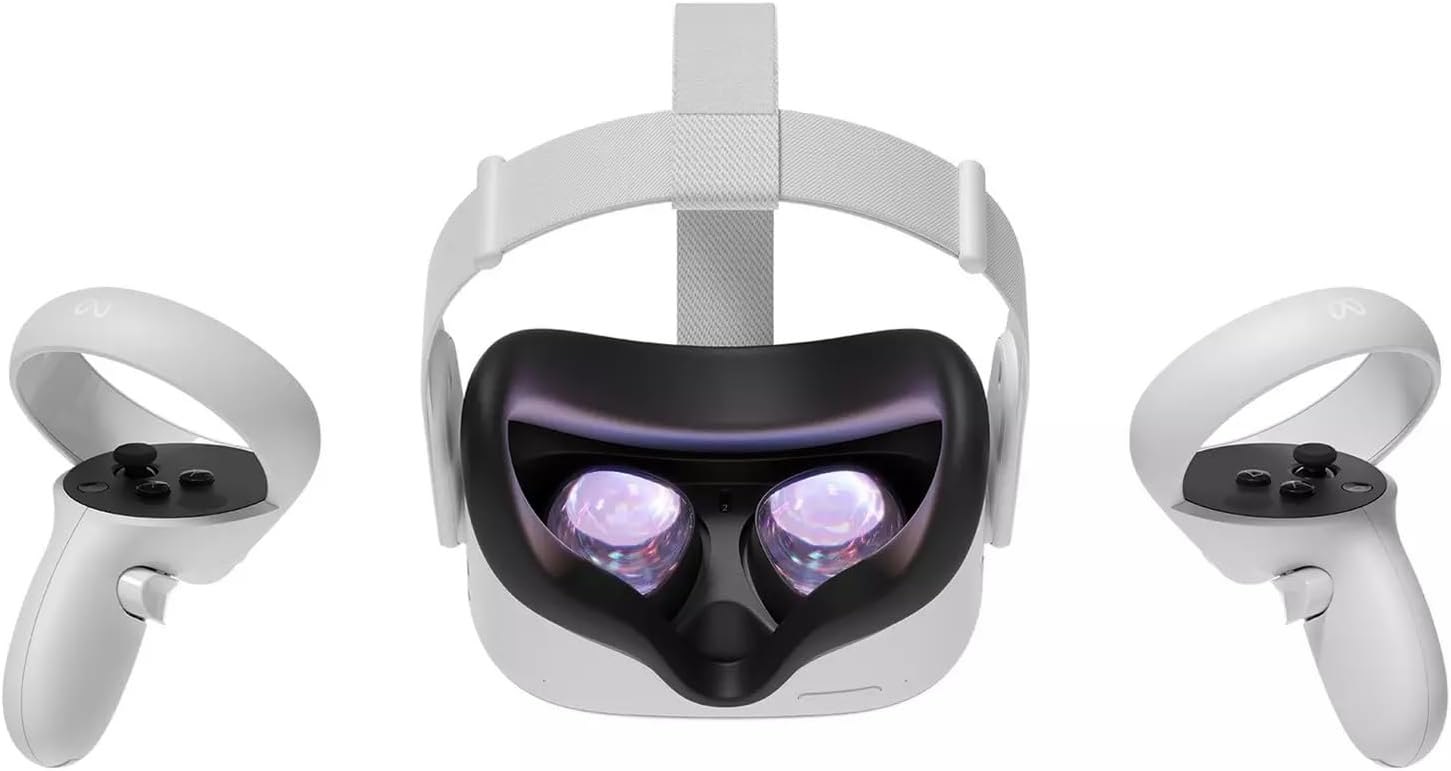
Audio is handled by integrated speakers with 3D positional output, per the listing’s special features. Built-in audio on standalone headsets is convenient and avoids another thing to charge, but it leaks sound to the room and does not isolate you the way headphones do. Hand tracking is also listed as a built-in capability, letting you navigate menus and some apps without picking up the controllers.
What the specs tell us
The headline number is the 95-degree field of view. That is modest. Higher-end headsets push past 100 degrees, and the practical difference is how much of a black border sits in your peripheral vision. On paper this is the clearest sign that the Quest 2 is a value product rather than a flagship, and it is the spec most likely to disappoint someone coming from a demo of a premium headset.
Inside-out tracking is the more important entry on the sheet. Cameras on the headset map your room and track the controllers, which eliminates the base stations that older PC VR systems required. It works well in reasonably lit rooms and poorly in dark ones, and it can lose track of a controller held behind your back, which matters for a handful of archery and shooter titles.
The listing claims a super-fast processor and high-resolution display without naming the chip, so treat that as marketing rather than a spec. What is concrete: 128 GB of storage, Wi-Fi connectivity, and a library the listing puts at over 250 titles spanning games, fitness, social apps and entertainment. For a standalone device, the size of that catalog is as important as any hardware number.
Living with it
The day-to-day reality of a standalone headset is that friction decides how much you use it. The Quest 2 does well here because there is no PC to boot and no cable to trip over, but it is still a device you charge, and headsets with the battery in the front enclosure are not known for long runtimes. Expect to plan around sessions rather than marathons, or to run it plugged in.
Buyers rate it 4.3 out of 5 across 8,736 ratings, which is a strong score for a product that demands this much setup and physical commitment from the user. Scores that high usually mean the core experience lands even when the hardware has rough edges.
The account requirement and software ecosystem are worth understanding before you buy. This is a closed platform, so the store is the store, and titles arrive and leave on the platform holder’s schedule. Optional PC streaming opens up a larger library if you have the hardware, but the standalone catalog is what most owners actually use.
Value for money
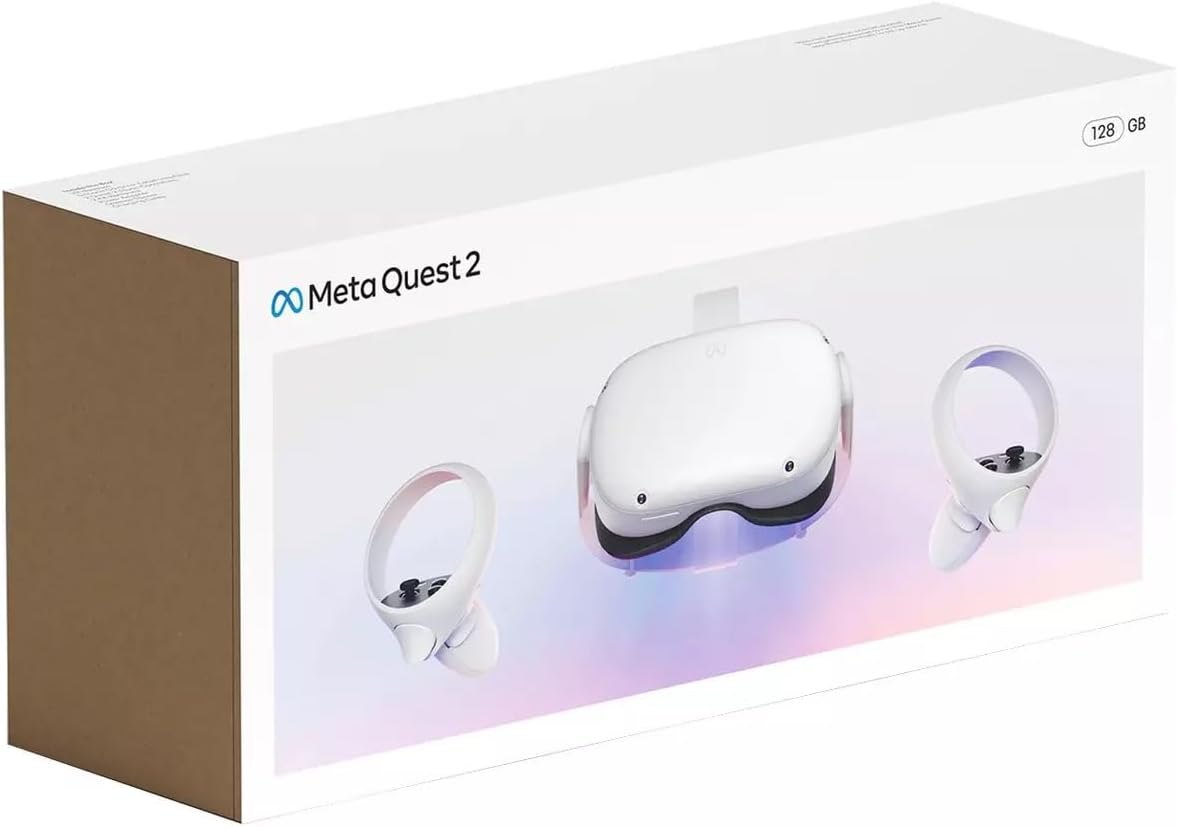
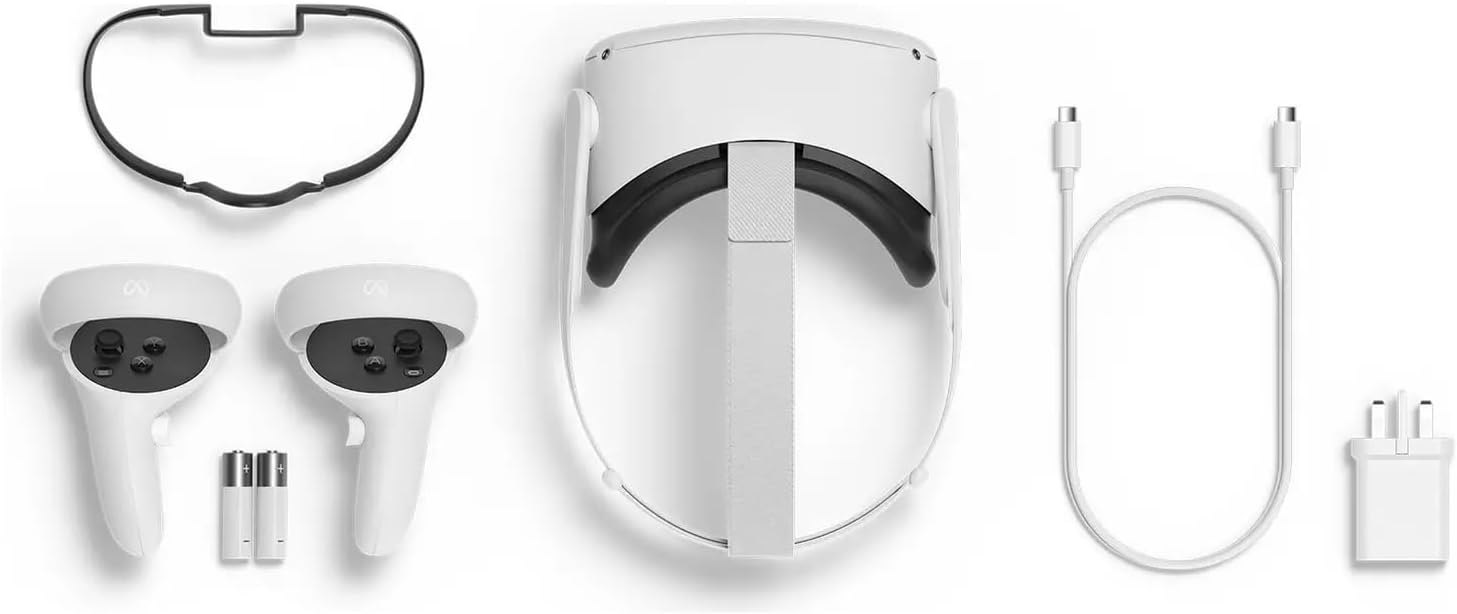
At $399.00 at the time of writing, this covers the headset, two controllers, and per the listing a copy of Beat Saber. That last item is not trivial, since Beat Saber is the title most new owners buy first and the one most likely to convince a skeptical household member that VR is worth the space.
The value case rests on there being no second purchase required. Tethered headsets at similar prices assume you already own a gaming PC worth considerably more. Against that, the Quest 2 is an older platform, and buying late in a product cycle means fewer years of software updates ahead than a newer model would offer.
Pricing in this category drifts downward over a product’s life and drops further during seasonal sales, so patience is usually rewarded if you are not in a hurry.
Alternatives
A newer Meta Quest model is the obvious comparison: pick it if you want a wider field of view, better optics and a longer support runway, and you can absorb the higher price. The Valve Index suits people who already own a strong gaming PC and want the best tracking and controller fidelity, accepting base stations and a cable in exchange. A PlayStation VR2 makes sense if your gaming happens on a PlayStation console and you would rather extend that than start a new platform.
The bottom line
The Quest 2 remains the lowest-friction entry point into VR, and the thing it does best is remove every reason not to put the headset on. Its age shows in the field of view and the support horizon, so buyers who want the experience to still feel current in three years should stretch to a newer model. For everyone else testing the water, this is a sensible place to start.
.gap-review{margin:2.5rem 0 0}.gap-review h2{font-size:1.5rem;margin:0 0 1.25rem}.gap-verdict{background:#0E1A2B;color:#fff;border-radius:16px;padding:1.5rem 1.75rem}.gap-verdict__head{display:flex;gap:1.25rem;align-items:center}.gap-score{margin:0;width:84px;height:84px;border-radius:50%;background:#FF5A1F;color:#fff;display:flex;flex-direction:column;align-items:center;justify-content:center;font-weight:800;font-size:1.9rem;line-height:1}.gap-score small{font-size:.7rem;font-weight:600;opacity:.85}.gap-eyebrow{margin:0 0 .35rem;text-transform:uppercase;letter-spacing:.08em;font-size:.75rem;font-weight:700;color:#FF5A1F}.gap-verdict__line{margin:0;font-size:1.125rem;line-height:1.45}.gap-proscons{display:grid;grid-template-columns:1fr 1fr;gap:1.25rem 2rem;margin-top:1.5rem;padding-top:1.25rem;border-top:1px solid rgba(255,255,255,.15)}.gap-proscons h3{margin:0 0 .6rem;font-size:.9rem;text-transform:uppercase;letter-spacing:.05em;color:inherit}.gap-proscons ul{list-style:none;margin:0;padding:0}.gap-proscons li{position:relative;padding-left:1.6em;margin:0 0 .45em}.gap-proscons li::before{position:absolute;left:0;top:0;font-weight:800}.gap-pros li::before{content:’+’;color:#4ADE80}.gap-cons li::before{content:’2013′;color:#F87171}.gap-specs,.gap-faq{margin-top:2rem}.gap-specs h3,.gap-faq h3{font-size:1.2rem;margin:0 0 .75rem}.gap-specs table{width:100%;border-collapse:collapse;font-size:.95rem}.gap-specs th,.gap-specs td{text-align:left;padding:.65rem .9rem;border-bottom:1px solid #E2E8F0;vertical-align:top}.gap-specs th{width:38%;background:#F4F6F9}.gap-faq details{border:1px solid #E2E8F0;border-radius:10px;padding:0 1rem;margin:0 0 .6rem}.gap-faq summary{cursor:pointer;padding:.85rem 0;font-weight:600}.gap-cta{margin-top:2rem;padding:1.25rem 1.5rem;background:#F4F6F9;border-radius:16px;display:flex;flex-wrap:wrap;gap:.75rem;align-items:center}.gap-btn{display:inline-block;padding:.85em 1.5em;border-radius:10px;font-weight:600;text-decoration:none!important;background:#FF5A1F;color:#fff!important}.gap-btn–secondary{background:transparent;color:#0E1A2B!important;border:2px solid #E2E8F0}.gap-disclosure,.gap-note{font-size:.875rem;color:#4A5568;margin:.75rem 0 0}@media(max-width:640px){.gap-proscons{grid-template-columns:1fr}}
Meta Quest 2 128GB VR Headset review
7.8/10
madagear.com verdict
Buy it if you want the cheapest credible way into VR gaming and fitness; skip it if you already own a PC VR rig or want the sharpest optics available.
What we like
- Fully standalone: no gaming PC, console or external base stations needed
- Inside-out tracking means no sensors to mount on your walls
- 128 GB of storage holds a large library without constant uninstalling
- Over 250 titles listed across gaming, fitness and social apps
- 3D positional audio and hand tracking are built in, no extra hardware
- Beat Saber bundled at the time of writing adds real value for newcomers
What we don’t
- 95-degree field of view is narrower than higher-end headsets
- Battery life on built-in VR headsets is typically short for long sessions
- Stock head strap is widely reported as the first thing owners replace
- An older platform now, so expect fewer years of software support ahead
Specs at a glance
| Brand | Meta Quest |
|---|---|
| Model | Advanced 128GB |
| Platform | Standalone |
| Storage | 128 GB |
| Field of view | 95 degrees |
| Tracking | Inside-out |
| Connectivity | Wi-Fi |
| Audio | Integrated 3D positional audio |
| Dimensions | 10.24 x 7.36 x 4.96 in |
| Color | White |
Frequently asked questions
Do I need a gaming PC to use the Quest 2?
No. The listing describes it as a standalone platform, meaning the headset runs games on its own hardware with no PC or console attached. A PC is optional if you want to stream higher-end PC VR titles to it over a cable or Wi-Fi.
Is 128 GB enough storage?
For most people, yes. VR games are generally smaller than modern flat-screen titles, so 128 GB typically holds a couple of dozen apps before you need to manage space. Heavy buyers who install everything will eventually be uninstalling things to make room.
Does it need external sensors in the room?
No. The listing specifies inside-out tracking, so cameras on the headset itself map your space and track the controllers. You set a play boundary once and the headset remembers the room.
What do buyers think of it?
Buyers rate it 4.3 out of 5 across 8,736 ratings at the time of writing, which is a strong score for a product category with this much setup involved. Common complaints in this class center on comfort and battery life rather than the core experience.
At the time of writing it lists at $399.00 for the 128 GB model with two controllers and, per the listing, a copy of Beat Saber included; headset pricing in this class tends to drift down through the product cycle and dip further during seasonal sales. Price and availability checked on 2026-11-14.
madagear.com is reader-supported. When you buy through links on our site we may earn an affiliate commission, at no extra cost to you. This never affects what we recommend.

Reviews
There are no reviews yet.